Every intelligent system — whether a search engine, a medical diagnosis tool, or a recommendation platform — needs a structured way to understand the world. Without a shared framework for defining concepts and their relationships, machines cannot reason, infer, or communicate meaning accurately.
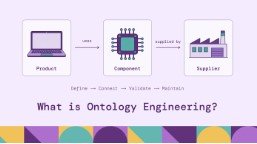
Ontology knowledge engineering provides exactly that framework. It is the practice of formally naming, defining, and organizing categories of knowledge, along with the properties that connect them. Far from being an abstract academic discipline, ontology engineering sits at the core of knowledge graphs, semantic search, natural language understanding, and AI reasoning systems. If you are pursuing an agentic ai course in hyderabad, you will find that ontologies appear across multiple domains — from healthcare and law to e-commerce and robotics.
What Is an Ontology in AI?
In philosophy, an ontology is the study of existence — what things are and how they relate to each other. In computer science and AI, the term carries a more practical meaning. An ontology is a formal, explicit specification of a shared conceptualization. This definition, proposed by Tom Gruber in 1993, remains the standard reference in the field.
In simpler terms, an AI ontology is a structured vocabulary that defines:
- Classes — the categories of things (e.g., Person, Disease, Product)
- Properties — the attributes and relationships between classes (e.g., hasSymptom, manufacturedBy)
- Individuals — specific instances of those classes (e.g., John, Influenza, iPhone 15)
- Axioms — logical rules that govern how these elements interact
A well-designed ontology allows machines to draw inferences. If the system knows that a Cardiologist is a type of Physician, and a Physician is a type of HealthcareProfessional, it can automatically classify a cardiologist under the broader category without being explicitly told.
Core Components of Ontology Knowledge Engineering
Building an ontology is not simply writing a list of terms. It requires a rigorous engineering process that balances logical precision with practical usability.
1. Requirement Specification The first step is identifying the domain and scope of the ontology. What questions should it answer? Who will use it? For example, a clinical ontology for a hospital system has very different requirements from a product ontology for an online retailer.
2. Conceptualization Here, domain experts and knowledge engineers collaborate to identify the key concepts, their definitions, and the relationships between them. This phase often involves analyzing existing documentation, interviewing subject-matter experts, and studying related ontologies.
3. Formalization Concepts identified in the previous step are translated into a formal language. The most widely used ontology language is OWL (Web Ontology Language), a W3C standard built on description logics. OWL allows precise, machine-readable definitions that support automated reasoning.
4. Implementation and Validation The ontology is implemented in a tool such as Protégé, an open-source ontology editor developed at Stanford. Reasoning engines like HermiT or Pellet are then used to check for logical consistency and validate inferences.
5. Maintenance Ontologies evolve. As domains change and new knowledge emerges, the ontology must be updated without breaking existing applications that depend on it. Version control and modular design are essential practices here.
Real-World Applications of Ontologies
Ontologies are not theoretical constructs — they power some of the most widely used AI applications today.
Healthcare: The SNOMED CT and Gene Ontology are among the most comprehensive biomedical ontologies, enabling clinical decision support, drug interaction detection, and medical record interoperability across institutions worldwide.
Search and Knowledge Graphs: Google’s Knowledge Graph relies on ontological structures to connect entities — people, places, organizations, and events — enabling richer, more accurate search results.
E-commerce: Product ontologies help platforms classify millions of items consistently, enabling faceted search, recommendation engines, and supply chain automation.
Legal and Regulatory AI: Legal ontologies define jurisdictions, statutes, obligations, and rights, enabling systems to reason about compliance and contract interpretation.
For learners enrolled in an agentic ai course in hyderabad, working with ontologies in at least one of these domains provides a solid foundation for building knowledge-driven AI systems.
Why Ontology Engineering Is a Valuable Skill
As AI systems grow more complex, the need for structured, interpretable knowledge representations is increasing. Large language models are powerful, but they lack consistent, verifiable knowledge structures. Ontologies complement neural approaches by providing explicit, auditable reasoning layers.
Engineers who understand ontology design can build systems that are not only accurate but also explainable — a critical requirement in regulated industries like finance, healthcare, and law.
Conclusion
Ontology knowledge engineering gives AI systems the ability to understand meaning, not just data. By formally naming categories, defining their properties, and encoding the logical rules that govern them, ontologists create the semantic foundation that intelligent systems need to reason reliably.
Whether you are just beginning your journey or expanding your expertise through an agentic ai course in hyderabad, ontology engineering is a skill that adds genuine depth to your AI knowledge — bridging the gap between raw data and machine understanding.