
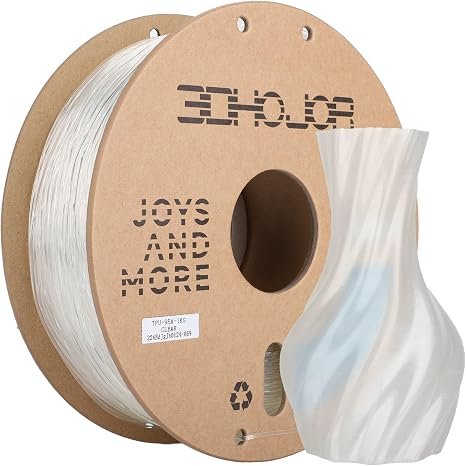
Choosing the right material is essential when creating flexible and durable 3D printed parts. While rigid filaments such as PLA are suitable for many projects, flexible materials offer additional possibilities for producing bendable accessories, protective covers, custom grips, and cushioning components. However, not all flexible materials provide the same balance of softness, strength, and printability.
TPU 95A filament is a popular option because it combines flexibility with firmness, making it suitable for a wide range of functional applications. But how does it compare with other flexible materials, and which option should you choose? This guide explores the differences to help you make an informed decision.
What Is TPU-95A Filament?
TPU stands for thermoplastic polyurethane, a flexible thermoplastic known for its elasticity, abrasion resistance, and durability. The 95A designation refers to its Shore A hardness rating, which measures resistance to indentation.
Compared with softer TPU grades, TPU-95A generally feels firmer while still allowing a printed object to bend and compress. This balance makes it useful for parts that need some flexibility without feeling excessively soft.
The flexibility of a finished print also depends on its design. Wall thickness, infill density, print orientation, and geometry can all influence how much a component bends under pressure.
TPU-95A vs. Other Flexible Filaments
Different flexible materials serve different purposes. Understanding their characteristics can help you choose the right filament for your project.
1. TPU-95A vs. Softer TPU
Softer TPU grades generally offer greater flexibility and a softer feel than 95A materials. They may be suitable for designs that require substantial deformation or a more rubber-like texture.
However, softer filament can be more challenging to feed through some extruders, especially when the filament path is not well supported.
TPU-95A is often a practical alternative when you need a firmer structure, easier handling, and useful flexibility. The best choice depends on your printer and the demands of the finished part.
2. TPU-95A vs. TPE
TPE, or thermoplastic elastomer, is a broad category of materials with rubber-like properties. TPU is itself a type of thermoplastic elastomer, although 3D printing products marketed as TPE may use different formulations.
Some TPE filaments are softer and more elastic than typical TPU-95A products. This can make them suitable for applications requiring substantial stretch or a soft touch.
TPU-95A may be preferable for users who want a balance of flexibility, abrasion resistance, and firmness. Since properties vary by formulation, compare the manufacturer’s specifications rather than relying on the material name alone.
3. TPU-95A vs. PLA
PLA is a rigid filament commonly used for decorative models, prototypes, and general-purpose prints. It is typically easier to print than flexible materials, making it a popular option for beginners.
However, PLA does not offer the same rubber-like flexibility as TPU-95A. A PLA component may crack or break under deformation that a suitable TPU part can tolerate.
Choose PLA for rigid objects that need to maintain their shape. Consider TPU-95A for flexible covers, grips, cushioning components, and parts that experience repeated bending.
4. TPU-95A vs. PETG
PETG is another popular rigid-to-semi-rigid printing material known for durability and impact resistance. It can be suitable for functional parts that need more toughness than a typical PLA print provides.
However, PETG is not designed to behave like a flexible elastomer. If your project requires a part that bends repeatedly, TPU-95A is generally a more appropriate starting point.
PETG may be better for rigid brackets, containers, and structural components, while TPU-95A suits flexible accessories and cushioning applications.
Comparison of Common 3D Printing Materials
| Material | Flexibility | Typical advantage | Suitable applications |
| TPU-95A | Flexible but relatively firm | Balance of elasticity and firmness | Grips, covers, bumpers |
| Softer TPU | More flexible | Greater softness and deformation | Flexible straps and soft components |
| TPE | Varies by formulation | Rubber-like behavior | Specialized flexible products |
| PLA | Low | Easy printing and rigid shapes | Models and prototypes |
| PETG | Limited compared with TPU | Durable, rigid parts | Brackets and functional components |
These are general comparisons. Actual performance depends on the specific filament formulation, printer settings, and design.
What Should You Consider Before Choosing?
Selecting the right Flexible Filament requires you to consider several factors.
Flexibility Requirements
Think about how much the finished part needs to bend or stretch. Softer materials may be suitable for highly flexible designs, while TPU-95A offers a firmer feel for many everyday applications.
Printer Compatibility
Flexible filament can be more difficult to feed than rigid plastic. Direct-drive extruders often provide better control, although some Bowden-style printers can also print TPU with suitable adjustments.
Durability and Wear
Consider whether the finished object will experience friction, repeated movement, or occasional impacts. TPU can provide useful abrasion resistance and flexibility, but performance varies by application.
Printing Settings
Check the manufacturer’s recommended nozzle temperature, printing speed, and other settings. Starting with a conservative speed and testing a small print can help improve extrusion consistency.
Budget and Material Quality
Compare filament specifications, packaging, dimensional consistency, and manufacturer guidance alongside price. A well-documented product can make setup and troubleshooting easier.
Tips for Printing TPU-95A Successfully
For better results, use the temperature range recommended by the manufacturer and begin with a slower print speed. Flexible filament can buckle or compress when pushed too quickly through the extruder.
Keep retraction settings conservative and check that the filament path is properly supported. TPU can also absorb moisture, so store it in a sealed, dry container and follow the manufacturer’s drying instructions when necessary.
Before printing a large component, test a small sample to evaluate flexibility, layer adhesion, and surface quality.
Conclusion
TPU-95A and other flexible filaments each have advantages depending on the requirements of your project. Softer TPU and some TPE formulations may be better for designs requiring greater softness, while PLA and PETG are more appropriate for many rigid applications.
TPU 95A filament is a useful middle ground for projects that need a balance of firmness, flexibility, and durability. By comparing hardness, printer compatibility, material properties, and intended use, you can select the right Flexible Filament for your next 3D printing project.
