
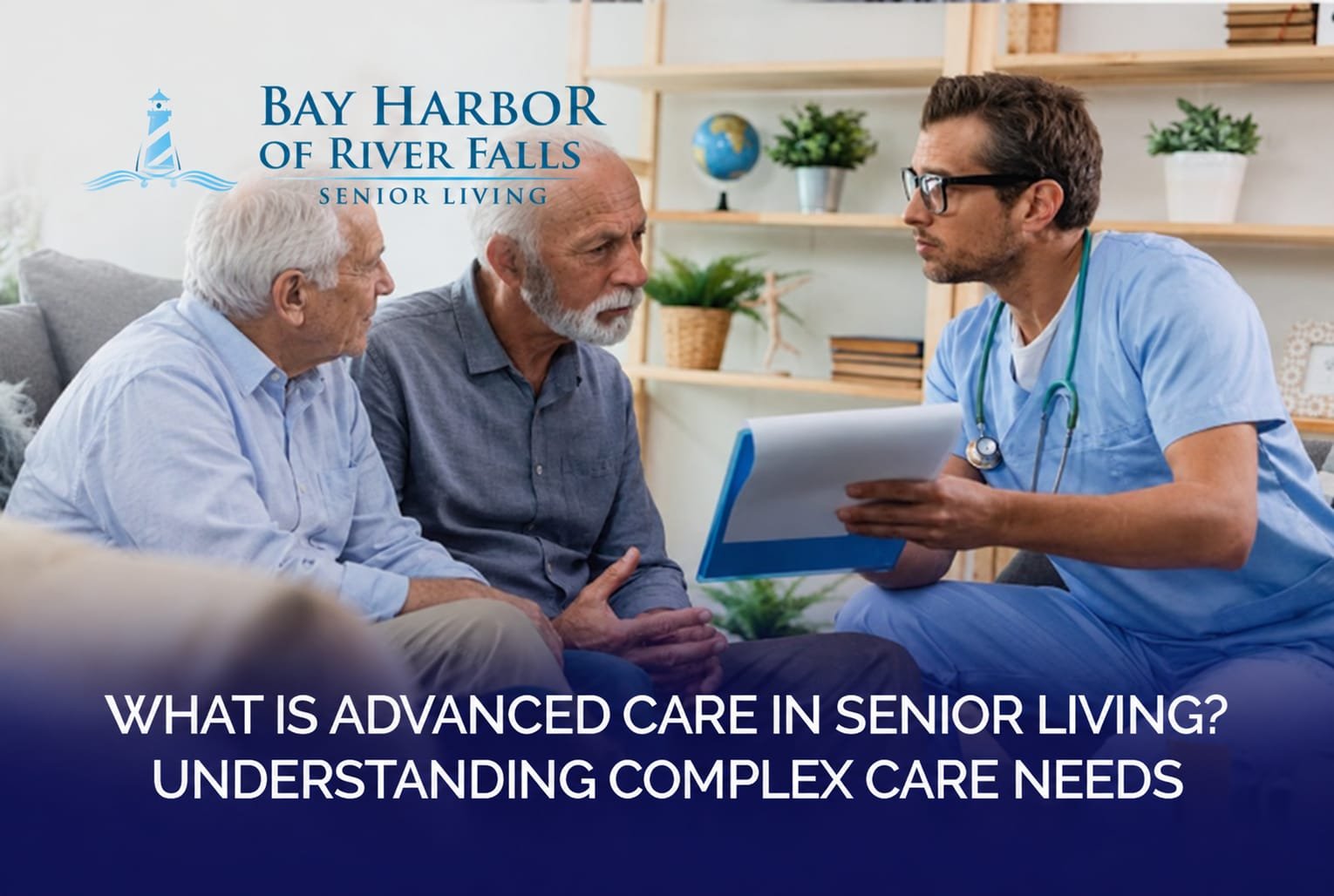
As people age, their care needs can change. Someone who once needed only occasional help with household tasks may eventually need assistance with medications, mobility, personal care, memory-related challenges, or ongoing health concerns.
This is where the idea of advanced care in senior living becomes important.
Advanced care generally refers to a higher or more specialized level of support for older adults whose needs are more complex than basic assistance with everyday activities. Depending on the community and the resident’s individual needs, this may involve more frequent monitoring, personalized care plans, coordination with healthcare professionals, and additional support with daily routines.
However, advanced care does not mean the same thing at every senior living community. Services, staffing, licensing, and care levels vary, so families should always ask exactly what a community can provide.
For families considering senior living in River Falls, WI, understanding different levels of care can make the decision process easier and help ensure a loved one receives appropriate support.
What Does Advanced Care Mean in Senior Living?
There is no single universal definition of “advanced care” across every senior living community.
In general, the term describes care designed around residents who have more complex physical, cognitive, or daily-living needs and require additional support beyond what is typically provided through basic independent living.
The National Institute on Aging explains that long-term care can include a range of services based on an older adult’s health and personal-care needs. These services may include assistance with everyday activities, personal care, nursing care, therapy, dementia support, and other specialized services.
For example, a resident may require more support because of:
- Reduced mobility or increased fall risk
- Difficulty managing daily activities independently
- Cognitive impairment or dementia
- Multiple ongoing health conditions
- Increased medication-management needs
- Changes in eating or personal-care routines
- Recovery or rehabilitation needs
- Increasing supervision or safety concerns
The important point is that advanced care should be individualized. Two residents of the same age may have completely different care requirements.
How Is Advanced Care Different From Regular Assisted Living?
Assisted living generally supports older adults who need help with daily activities but do not require the intensive medical and nursing care associated with a nursing home.
Advanced care may become relevant when an individual’s needs become more involved or require greater coordination.
For example, someone receiving basic assisted-living support might need help getting dressed, preparing for meals, or maintaining a daily routine. Another resident may require more frequent assistance with mobility, closer observation because of cognitive changes, or additional coordination around health-related needs.
This doesn’t necessarily mean the person immediately needs a nursing home.
Instead, families should look carefully at the individual’s current needs, future needs, and the specific services available within the community.
What Are Complex Care Needs for Seniors?
Complex care needs can develop gradually or appear following an illness, injury, hospitalization, or significant change in health.
Some older adults may experience several challenges at the same time. For example, a person could have limited mobility while also managing diabetes, memory changes, and difficulty completing everyday tasks.
This combination can make care more complicated than addressing one issue independently.
Common Examples of Complex Care Needs
Complex needs can include:
Mobility and fall concerns:
An older adult may need additional assistance moving around safely, transferring between a bed and chair, or navigating the community.
Cognitive changes:
Memory loss, confusion, or dementia can affect a person’s ability to complete routines safely and consistently.
Multiple health conditions:
Older adults may live with several chronic conditions at the same time, creating a need for coordinated support.
Personal-care assistance:
Bathing, dressing, grooming, toileting, and eating can become increasingly difficult as physical or cognitive abilities change.
Medication-related support:
Some residents may need assistance with medication routines or coordination with healthcare professionals.
Changes after hospitalization:
An illness, surgery, or injury can temporarily or permanently change how much assistance a person needs.
These situations don’t automatically determine which type of senior living environment is appropriate. A healthcare professional and the senior living provider can help families understand what level of support is suitable.
Why Personalized Care Plans Matter
One of the most important parts of advanced senior care is recognizing that care should be based on the individual rather than simply their diagnosis or age.
A personalized care plan can consider a resident’s:
- Physical abilities
- Cognitive needs
- Daily routines
- Personal preferences
- Medical history
- Social interests
- Mobility and safety concerns
- Changing care requirements
This approach allows caregivers and families to focus on what the resident can do independently while providing assistance where it is needed.
The goal isn’t simply to provide more care. It is to provide the right type and level of support while preserving dignity, independence, and quality of life.
How Can Senior Living Communities Support Changing Care Needs?
A major benefit of senior living is having support available as everyday needs change.
Depending on the community, support may include assistance with daily activities, meals, housekeeping, wellness programs, social activities, safety systems, and coordination with healthcare providers.
For example, Bay Harbor of River Falls provides independent living and assisted living options, along with 24/7 staff support and wellness-focused services. Its community amenities include three home-style meals, housekeeping, a wireless call system, round-the-clock staff support, and a 24/7 on-call nurse. Families should discuss their loved one’s specific needs with the community to determine whether the available services are appropriate.
This type of environment can be particularly valuable when an older adult needs more support than family members can consistently provide at home.
Advanced Care and Dementia-Related Needs
Cognitive changes can make senior care more complex.
A person living with dementia may experience difficulties with memory, communication, orientation, decision-making, or everyday routines. As the condition progresses, families may need to reconsider whether the current living arrangement continues to provide an appropriate level of support.
The National Institute on Aging notes that residential care options differ and that some facilities provide specialized programs for people with Alzheimer’s disease or other forms of dementia.
For families, the key question is not simply whether a community offers “dementia care.” It is important to understand:
- What type of dementia support is available?
- How are changes in behavior handled?
- What level of supervision is provided?
- How does the community respond to safety concerns?
- How are families involved in care planning?
- What happens if the resident’s needs increase?
These questions can help families determine whether a community is equipped for their loved one’s current and potential future needs.
When Might a Senior Need a Higher Level of Care?
There isn’t one specific event that means an older adult needs advanced care.
Sometimes the transition becomes apparent through a gradual pattern of changes.
For example, families may notice that a loved one is:
- Having increasing difficulty with daily activities
- Experiencing repeated falls or mobility problems
- Forgetting important medications or appointments
- Struggling to prepare meals safely
- Becoming increasingly confused
- Having difficulty maintaining personal hygiene
- Spending more time isolated at home
- Requiring more assistance than family caregivers can provide
These signs don’t automatically mean a particular type of facility is necessary. Instead, they are reasons to have a conversation with a healthcare professional and evaluate available care options.
The NIA recommends considering both an older person’s current and future needs when evaluating long-term care options.
Advanced Care Should Still Encourage Independence
More support doesn’t have to mean less independence.
In a well-designed senior living environment, care can focus on helping residents remain involved in the parts of life they can still manage independently.
For example, a resident may need assistance with certain personal-care tasks while continuing to choose their meals, participate in activities, maintain friendships, and make decisions about their daily routine.
This balance matters because senior care is not only about physical safety. Emotional well-being, social connection, dignity, purpose, and personal choice are also important parts of a fulfilling lifestyle.
What Should Families Ask About Advanced Care?
Before choosing a senior living community, families should ask specific questions about care capabilities rather than relying only on general descriptions such as “personalized care” or “advanced care.”
During a visit, ask:
- What levels of care does the community currently provide?
- How are residents’ care needs assessed?
- How often are care plans reviewed?
- What happens if a resident’s needs increase?
- What nursing support is available?
- How does the community respond to falls or other safety concerns?
- How are medication needs handled?
- Does the community support residents with cognitive impairment or dementia?
- How does the community communicate changes in a resident’s condition to family members?
- What services are included, and which may cost extra?
The NIA similarly recommends visiting facilities, asking about staffing and services, discussing special needs, and understanding costs before making a long-term-care decision.
Why Planning Ahead Can Make Senior Care Easier
Families often begin exploring senior living only after a crisis occurs.
However, planning before an urgent situation can provide more time to compare communities, understand available services, discuss preferences with an older loved one, and consider how care needs could change in the future.
The NIA recommends thinking about long-term care before it becomes necessary because needs can develop gradually or arise suddenly after events such as an illness or stroke.
Planning ahead also gives older adults a greater opportunity to participate in decisions about where and how they want to live.
Advanced Care at Bay Harbor of River Falls
For families exploring assisted living in River Falls, WI, Bay Harbor of River Falls offers a community focused on comfort, connection, independence, and personalized support.
The community provides independent living and assisted living, with services designed to help residents maintain an engaging daily lifestyle while having access to support when needed. Its amenities include meals, housekeeping, activity spaces, outdoor areas, a wireless call system, round-the-clock staff support, and a 24/7 on-call nurse.
Bay Harbor also incorporates technology into its approach to resident safety, including AI-driven fall detection technology designed to help identify potential fall events and support proactive safety planning.
Families should discuss their loved one’s individual needs directly with the Bay Harbor team to understand which services are appropriate and whether the community can accommodate changing care requirements.
Frequently Asked Questions About Advanced Care in Senior Living
What is advanced care in senior living?
Advanced care generally refers to a higher or more specialized level of support for older adults with complex physical, cognitive, safety, or daily-living needs. The exact meaning and services vary between communities.
Is advanced care the same as nursing home care?
No. Advanced care and nursing home care are not necessarily the same. Assisted living and other senior living communities may provide different levels of support, while nursing homes generally provide more intensive medical and nursing care. The appropriate setting depends on an individual’s needs.
What are examples of complex care needs in older adults?
Examples can include significant mobility limitations, dementia or cognitive changes, multiple health conditions, increased assistance with personal care, medication-related support, or greater safety and supervision needs.
How do I know if my parent needs more care?
Look for changes in mobility, personal hygiene, medication management, meal preparation, memory, safety, or the ability to complete everyday activities. A healthcare professional can help evaluate the situation and determine what type of support may be appropriate.
Can senior living support changing care needs?
Some senior living communities offer multiple levels of support, while others have more limited services. Families should ask specifically how a community handles increasing care needs and what happens if a resident eventually requires services beyond the community’s capabilities.
What should I ask a senior living community about advanced care?
Ask about available care levels, staffing, nursing support, medication assistance, dementia support, care-plan reviews, emergency procedures, additional fees, and what happens if a resident’s needs increase.
Final Thoughts
Advanced care in senior living is ultimately about matching the right level of support to an older adult’s changing needs.
As health, mobility, memory, and daily-living abilities change, care needs may change as well. Understanding those changes early can help families make more informed decisions instead of waiting until a crisis forces an immediate move.
The best approach is to look beyond the label of “advanced care” and ask what services, staffing, safety measures, and personalized support a community can actually provide.
For families considering senior living in the River Falls area, visiting the community, speaking with the care team, and discussing your loved one’s current and potential future needs can be an important first step toward finding the right fit.
