
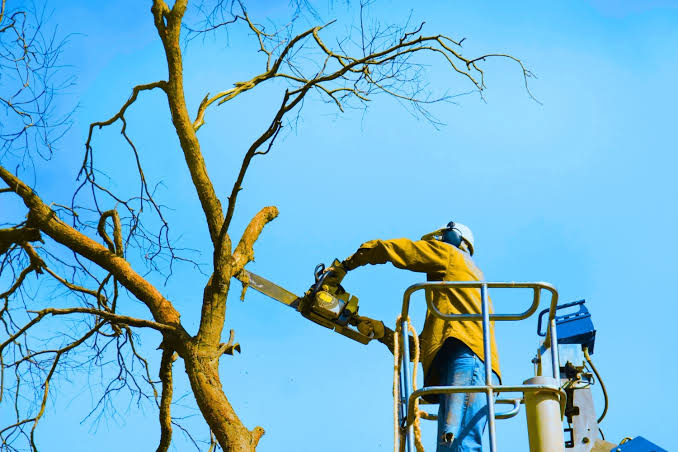
A towering oak in your backyard might feel like a permanent fixture, but trees don’t last forever. Storms weaken them, disease hollows them out, and roots eventually push too close to your foundation. Knowing when to let go of a tree — and who to call when you do — can save your home from serious damage.
At Harris Home Solutions, we’ve spent years helping homeowners navigate exactly this decision. Some trees just need a trim. Others pose a genuine risk to your family, your roof, or the power lines running through your yard. This post walks through the warning signs, the benefits of acting early, and why choosing the right team matters more than most people realize.
What Are the Warning Signs That a Tree Needs to Come Down?
Not every leaning branch spells disaster, but certain signs point to trouble brewing beneath the bark. Deep cracks running along the trunk, large sections of peeling bark, or mushrooms growing near the base are all red flags. Fungus at the roots often means internal decay, even if the tree still looks green and healthy from the street.
Dead branches scattered throughout the canopy are another clue worth taking seriously. If more than half the tree’s crown is dead, the whole structure has likely lost the strength it needs to withstand strong wind or heavy snow. Homeowners sometimes wait too long on this one, assuming a tree will bounce back the following spring. Unfortunately, dead wood doesn’t heal itself.
Leaning trees deserve extra scrutiny too. A slight natural lean is normal for many species, but a sudden shift — especially after a storm — suggests the root system has been compromised. Soil heaving up around the base is a telltale sign that the roots are losing their grip.
Why Does Tree Location Matter So Much?
Where a tree sits on your property changes the entire risk calculation. A dying tree out in an open field poses little threat to anyone. That same tree positioned fifteen feet from your living room window is a different story entirely.
Trees growing close to power lines create an added layer of danger, both from falling limbs and from the electrical hazards involved in any removal work. Roots pushing against a foundation, driveway, or septic system can cause thousands of dollars in structural repairs long before the tree itself shows visible signs of distress above ground.
Harris Home Solutions evaluates each property individually because every yard tells a different story. A single oak might be perfectly safe in one location and a genuine liability twenty feet to the left.
What Happens During a Professional Tree Assessment?
A proper assessment starts with a close look at the trunk, canopy, and root flare — the point where the trunk widens into the roots. Our team checks for decay, pest damage, and structural weaknesses that aren’t always obvious from a glance.
We also factor in the tree’s species, since some trees are naturally more prone to sudden limb failure than others. Silver maples and Bradford pears, for example, are known for weak branch unions that can give way unexpectedly, even in healthy specimens. Oaks and hickories tend to be sturdier but aren’t immune to storm damage or age-related decline.
After the assessment, homeowners get a clear recommendation: trim, monitor, or remove. We never push removal when a simpler solution will do, because trust matters more to us than a bigger invoice.
How Does Removing a Hazardous Tree Protect Your Home?
Protecting your home from costly storm damage starts with removing hazardous trees before they fail, which is exactly why so many homeowners turn to our tree removal service when a dying or diseased tree threatens their property. Falling limbs can puncture roofs, crush fences, and total vehicles parked underneath. A full tree failure during a storm can cause damage running into tens of thousands of dollars, not to mention the danger posed to anyone nearby.
Beyond the immediate safety benefits, removing a problem tree often improves the overall health of your landscape. Diseased trees can spread fungus and pests to neighboring plants, so taking one out early protects the rest of your yard. It also opens up sunlight and airflow, which can help nearby grass, shrubs, and garden beds thrive.
Harris Home Solutions handles every removal with insured, trained crews who understand how to bring a tree down safely, even in tight spaces near homes, fences, or power lines. We clean up every branch and log before we leave, so you’re not stuck dealing with the aftermath yourself.
What Should You Look for When Hiring a Tree Removal Company?
Not all tree services operate the same way, and the cheapest quote isn’t always the safest choice. Look for a company that carries liability insurance and workers’ compensation coverage, since tree removal is genuinely dangerous work. Ask whether the crew is certified and how they plan to handle debris cleanup once the job is done.
It’s also worth asking about equipment. Companies using proper rigging techniques and modern equipment can remove trees in tight spaces without damaging your lawn, driveway, or neighboring structures. A rushed job with the wrong tools often leaves more mess — and more risk — than the tree itself ever posed.
Harris Home Solutions prides itself on transparent pricing and clear communication from the first phone call to the final cleanup. Homeowners know exactly what to expect before any chainsaw starts running.
Ready to Protect Your Property?
A hazardous tree rarely improves with time. Every storm season that passes without action increases the odds of a limb coming down on your roof, your car, or worse. The good news is that identifying the risk early gives you options, rather than leaving you scrambling after an emergency.
If you’ve noticed cracks, dead branches, or a worrying lean in a tree on your property, don’t wait for the next big storm to find out how serious the problem really is. Reach out to Harris Home Solutions for a thorough assessment, honest recommendations, and a cleanup crew that treats your property like their own. Your yard — and your peace of mind — will thank you.
