
Children don’t always tell you when they’re having trouble hearing. In fact, younger children may not even realise that sounds are supposed to be clearer than what they’re experiencing. They simply adapt.
That can make hearing difficulties surprisingly easy to miss. A child might seem distracted, ignore instructions, turn the television up, or struggle to keep up with conversations in noisy places. It’s tempting to put these behaviours down to personality or attention, but sometimes hearing is part of the picture.
Knowing what to watch for can help you decide when a professional hearing assessment makes sense.
Hearing Difficulties Aren’t Always Obvious
When people picture hearing loss, they often imagine someone who can’t hear sounds at all. Childhood hearing difficulties can be much subtler.
A child may hear you perfectly well when you’re sitting beside them in a quiet room but struggle to understand their teacher across a busy classroom. Another child might hear lower sounds while missing softer speech sounds.
Children are also remarkably good at compensating. They watch faces, follow what other children are doing, or guess what was said from context. From the outside, everything may appear normal.
That’s one reason parents, teachers, and caregivers should pay attention to patterns rather than waiting for an obvious problem.
Signs That May Be Worth Checking
One missed instruction doesn’t mean your child has a hearing problem. Kids get distracted. They’re tired sometimes, and occasionally they simply don’t want to listen.
Repeated patterns are different.
You might notice that your child regularly asks “what?” or “huh?” even when you’re speaking clearly. Perhaps they turn the television louder than everyone else prefers, don’t respond when called from another room, or seem to watch your mouth closely during conversations.
At school, the signs can look different. A teacher might report that your child has trouble following spoken instructions or appears less attentive during group discussions.
Speech can provide clues too. If your child isn’t developing speech and language as expected, checking hearing may be one part of understanding what’s happening.
None of these behaviours proves that hearing loss is present. They simply provide good reasons to investigate rather than guess.
Why Ear Infections Matter
Ear infections are common in childhood, particularly among younger children. Most resolve without causing lasting hearing problems.
The issue is that fluid can sometimes remain behind the eardrum after the pain and other obvious symptoms have disappeared. That fluid can temporarily reduce how efficiently sound travels through the middle ear.
Imagine trying to listen to someone while your ears feel blocked after a flight. You can still hear, but speech may sound muffled.
For a child learning new words every day, even temporary changes in hearing can make communication more difficult. If your child has experienced repeated ear infections and seems less responsive to sounds afterward, it’s sensible to mention it to a healthcare professional.
Speech Delay Can Be a Reason to Check Hearing
Learning to speak depends heavily on hearing speech clearly.
Children listen to the people around them, gradually recognise patterns, and learn to reproduce the sounds they hear. If those sounds aren’t coming through clearly, developing accurate speech can become harder.
Of course, speech delays can have many causes. A hearing assessment doesn’t diagnose every reason a child may be speaking later than expected.
It can, however, help rule hearing in or out as a contributing factor.
Parents concerned about communication can speak with hearing specialists for children about age-appropriate testing and what the results may mean for their child.
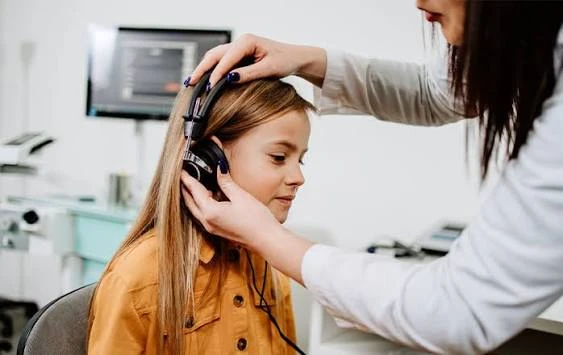
What Happens During a Children’s Hearing Test?
Parents sometimes wonder how anyone can test the hearing of a toddler who won’t sit still and certainly won’t press a button every time they hear a beep.
That’s where children’s hearing assessments differ from typical adult tests.
The method used can depend on the child’s age, development, and ability to participate. Babies and very young children don’t necessarily need to explain what they’re hearing. Audiologists can use objective tests or observe reliable responses to sounds.
As children get older, testing can become more interactive. A young child might be taught to perform a simple action after hearing a sound, turning the assessment into something closer to a game.
School-age children can usually follow more conventional testing instructions.
The goal is the same: gather useful information about how the child responds to sound without expecting them to behave like a miniature adult.
A Passed Newborn Screening Isn’t a Lifetime Guarantee
Many babies undergo hearing screening shortly after birth. That’s valuable because congenital hearing problems can sometimes be identified very early.
But hearing can change.
A child who passed a newborn screening can still experience hearing difficulties later because of illness, middle-ear problems, injury, noise exposure, or other factors.
Think of newborn screening as a snapshot rather than a lifetime certificate.
If you’re concerned about your child’s hearing several years later, an earlier passed screening shouldn’t stop you from asking about another assessment.
Don’t Forget the Classroom
Some hearing difficulties become noticeable only after a child starts preschool or school.
Home can be relatively forgiving. You’re often close to your child, conversations may involve only one or two people, and familiar routines provide plenty of clues about what’s being said.
Classrooms are different.
There may be twenty children talking, chairs moving, air conditioning running, and a teacher speaking from several metres away. Even a child who manages well at home may have trouble understanding speech against all that background noise.
Watch for changes in school performance, frequent misunderstandings of verbal instructions, or reports that your child appears inattentive.
Teacher observations can be particularly useful because teachers see how children communicate in an environment parents rarely witness firsthand.
Prepare a Few Observations Before the Appointment
You don’t need to diagnose the problem yourself before arranging an assessment. That’s the professional’s job.
Still, a little observation can be helpful.
Notice when the difficulty happens. Is it mostly in noisy places? Does your child respond when looking directly at you but not when you’re behind them? Have there been recent or recurring ear infections? Has a teacher noticed anything similar?
You can also note concerns about speech, language, or changes in behaviour.
These details give the audiologist useful context and can help build a clearer picture of what your child experiences outside the testing room.
Trust Patterns, Not Single Moments
Every parent has called their child’s name three times only to discover that the child was completely absorbed in a toy or television show. That’s normal childhood behaviour.
The reason to consider a hearing assessment is usually a pattern.
Repeatedly missing speech, needing frequent repetition, struggling in noisy environments, experiencing speech delays, or showing changes after ear infections are all observations worth discussing with a qualified professional.
A hearing test doesn’t automatically mean something is wrong. Sometimes the most useful result is reassurance that hearing appears to be within the expected range. If a problem is identified, having that information gives parents and professionals a clearer idea of what to do next.
Children can’t always explain what they’re hearing. Paying attention to the small signs can help you ask the right questions for them.
