
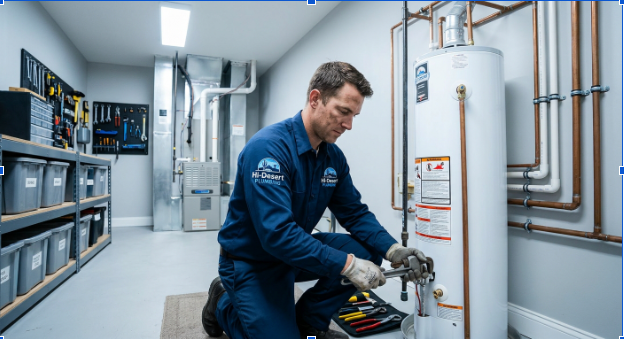
Cold showers have a way of ruining an otherwise perfectly good morning. One minute you’re half-asleep, reaching for the hot water tap, and the next you’re wide awake, shivering, and wondering what exactly went wrong. A failing water heater rarely announces itself ahead of time. It just stops working, usually at the most inconvenient moment possible.
For homeowners in the high desert, this problem comes with its own set of challenges. Hard water, extreme temperature swings, and sediment buildup all take a toll on water heaters faster than in milder climates. That’s where Hi-Desert Plumbing steps in, offering dependable, local expertise that keeps hot water flowing and households running smoothly.
This post walks through the common signs of water heater trouble, what causes them, and why working with an experienced local team makes all the difference.
What Causes a Water Heater to Stop Working?
Water heaters are workhorses. They run quietly in the background, heating and reheating water day after day, year after year. But like any appliance, they wear down over time. A few common culprits tend to be behind most breakdowns:
- Sediment buildup: Minerals in hard water settle at the bottom of the tank, reducing efficiency and sometimes clogging components entirely.
- Corroded anode rods: This sacrificial rod protects the tank from rust, but once it wears out, the tank itself becomes vulnerable.
- Thermostat malfunctions: A faulty thermostat can mean water that’s scalding hot one day and lukewarm the next.
- Pilot light or ignition issues: For gas water heaters, a pilot light that won’t stay lit usually points to a deeper issue with the thermocouple or gas supply.
- Leaks: Whether from loose fittings or a cracked tank, leaks are a clear sign that something needs attention right away.
Catching these problems early can mean the difference between a simple fix and a full system replacement.
How Do You Know It’s Time to Call a Professional?
Some signs are obvious. Water pooling around the base of the tank, strange rumbling noises, or a complete loss of hot water all point to a problem that needs immediate attention. Other signs are more subtle.
Discolored or rusty water, for instance, often signals internal corrosion. A water heater that takes noticeably longer to heat water, or one that runs out of hot water faster than it used to, may be struggling with sediment buildup or a failing heating element. Even a slight sulfur smell can indicate bacteria buildup inside the tank.
Ignoring these warning signs rarely makes them go away. In fact, small issues tend to compound into bigger, costlier ones the longer they’re left unaddressed. A tank that’s leaking slowly today could rupture entirely tomorrow, leading to water damage that extends far beyond the unit itself.
Why Local Expertise Matters for High Desert Homes
Not all water heater problems are created equal, and not all plumbers understand the specific challenges that come with high desert living. Hard water is a constant battle in this region, and it accelerates mineral buildup inside tanks and pipes alike. Temperature extremes, from scorching summers to freezing winter nights, also put extra strain on plumbing systems.
A plumbing team that’s worked in this environment for years brings a different level of insight than one unfamiliar with local water conditions. They know which parts tend to fail first, which brands hold up best against mineral-heavy water, and how to recommend solutions that actually last.
Trust Hi-Desert Plumbing With Your Home’s Hot Water Needs
Comprehensive water heater repair from a team that knows the high desert inside and out gives homeowners real peace of mind when something goes wrong. Hi-Desert Plumbing has spent years serving local families and understands exactly how regional water conditions affect these systems over time. Instead of guessing at a diagnosis, the team arrives prepared to identify the root cause quickly and recommend a solution that fits both the problem and the budget.
Every repair starts with a thorough inspection. From there, the technicians at Hi-Desert Plumbing walk homeowners through exactly what’s wrong, what it will take to fix it, and what to expect moving forward. There’s no pressure to upsell unnecessary services, just honest, straightforward guidance from people who genuinely want to help.
Whether it’s a minor thermostat adjustment or a more involved repair, the goal is always the same: get hot water flowing again as quickly and affordably as possible, without cutting corners along the way.
Keeping Hot Water Reliable for the Long Run
A water heater that’s properly maintained and promptly repaired when issues arise can last well beyond its expected lifespan. Regular flushing to remove sediment, periodic anode rod checks, and attention to any unusual noises or smells all go a long way toward extending the life of the unit.
For homeowners who’d rather not tackle these tasks solo, scheduling routine maintenance with a trusted local provider takes the guesswork out of the equation entirely. It also means problems get caught early, before they turn into emergencies.
Cold showers don’t have to be part of the routine. With a team of experienced professionals just a phone call away, hot water troubles become a quick fix rather than a lingering headache. Reach out to Hi-Desert Plumbing today to schedule a service and get back to enjoying reliable hot water at home.
Frequently Asked Questions
How long do water heaters typically last?
Most tank-style water heaters last between 8 and 12 years, though this can vary depending on water quality, usage, and maintenance habits.
Is it better to repair or replace an aging water heater?
This often depends on the age of the unit and the extent of the damage. Units under 8 years old with a single issue are usually worth repairing, while older units with multiple problems may be more cost-effective to replace.
What’s the average cost of a water heater repair?
Costs vary widely based on the issue, but minor repairs like thermostat replacements tend to be far less expensive than major component failures or full tank replacements.
Can hard water really damage a water heater?
Yes. Hard water accelerates sediment buildup inside the tank, which reduces efficiency and can shorten the unit’s overall lifespan if left unaddressed.
