
Austin’s weather doesn’t play nice. One week brings scorching triple-digit heat, the next delivers hailstorms that pound rooftops without warning. If your roof has seen better days, you’ve probably already noticed how quickly traditional shingles wear down under this kind of pressure. That’s why more homeowners across the Austin area are turning to a sturdier, longer-lasting alternative: standing seam metal roofing.
This roofing style isn’t new, but its popularity has surged as homeowners look for durability that actually holds up against Texas weather. Unlike asphalt shingles that crack, curl, and lose granules over time, standing seam panels interlock to form a smooth, continuous surface with raised seams that prevent water infiltration. The result is a roof that can handle heavy rain, high winds, and intense sun without constant maintenance.
At REPS Austin Area Roofer, we’ve seen firsthand how this upgrade transforms a home’s protection and curb appeal. This article breaks down what standing seam roofing is, why it performs so well in Central Texas, and what homeowners should know before making the switch.
What Makes Standing Seam Roofing Different?
Standing seam metal roofing gets its name from the vertical seams that connect adjacent panels. These seams rise above the roof’s flat surface, creating a raised ridge that locks panels together and keeps fasteners hidden beneath the metal. That’s a significant departure from exposed-fastener metal roofs, where screws sit on the surface and can loosen or corrode over time.
Because the fasteners are concealed, standing seam roofs resist leaks far better than older metal roofing styles. Water simply has nowhere to pool or seep through, since the interlocking panels create a nearly seamless barrier from ridge to eave.
Most standing seam systems are made from aluminum, steel, or zinc, each offering a different balance of weight, cost, and longevity. Aluminum resists corrosion well and suits coastal or humid climates, while steel offers excellent strength at a lower price point. Zinc, though pricier, can last over a century with minimal upkeep.
How Long Does a Standing Seam Roof Last?
A well-installed standing seam roof can last 40 to 70 years, depending on the material and maintenance. Compare that to asphalt shingles, which typically need replacement every 15 to 25 years, and the long-term value becomes clear. Fewer replacements mean fewer disposal costs and less material waste over a home’s lifetime.
Why Standing Seam Roofs Perform So Well in Austin’s Climate
Austin sits in a climate zone that tests roofing materials in every possible way. Summers bring relentless UV exposure and heat that can soften or warp weaker materials. Spring and fall bring severe thunderstorms, sometimes with hail large enough to dent lesser roofing products. Standing seam metal roofing handles all of it with ease.
Heat reflection plays a major role here. Metal roofing reflects a significant portion of solar radiation rather than absorbing it, which helps keep attic temperatures lower. Many homeowners notice a difference in their cooling costs once they switch, since the roof isn’t trapping as much heat inside the home.
Wind resistance is another advantage. The interlocking panel design means there’s no loose edge for wind to catch, unlike shingles that can lift and tear away during storms. Standing seam systems are typically rated to withstand wind speeds well above what asphalt roofing can handle, which matters given Central Texas’s exposure to severe spring storms.
Hail resistance varies by gauge and material, but thicker steel or aluminum panels resist denting far better than shingles resist cracking. While no roof is entirely hail-proof, metal roofing tends to come through storms with far less damage than other materials.
Does a Metal Roof Make Noise During Rain?
This is one of the most common concerns homeowners raise, and it’s largely a myth tied to older corrugated metal roofing. Standing seam systems are installed over solid decking with underlayment and insulation, which absorbs sound significantly. Most homeowners report that rain on a standing seam roof sounds no louder than it would on a shingle roof.
What to Expect From the Installation Process
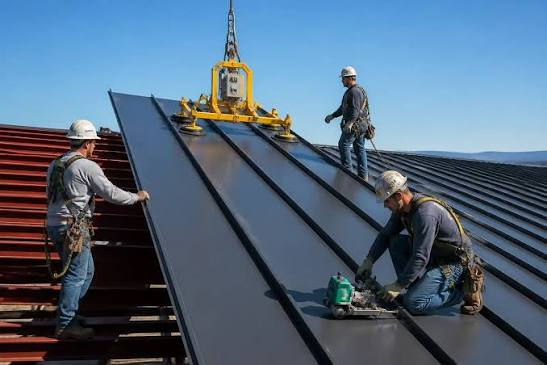
Installing a standing seam roof requires more precision than laying shingles, which is why choosing an experienced contractor matters. The process generally involves removing the old roofing material, inspecting and repairing the decking as needed, installing underlayment for moisture protection, and then fastening the panels using a mechanical seaming process that locks each section tightly in place.
Because panels are often custom-cut to fit the specific dimensions of a roof, measurements need to be exact. A poorly measured or improperly seamed roof can lead to water intrusion down the line, even with a premium material. This is where standing seam roof installation becomes a service worth trusting to professionals who understand the nuances of panel alignment, seam locking, and proper flashing around chimneys, vents, and skylights.
Timeline-wise, most standing seam roof installations on a typical residential home take anywhere from three to seven days, depending on roof size, complexity, and weather conditions during the project.
Is Standing Seam Roofing Worth the Investment?
Cost is often the first question homeowners ask, and it’s a fair one. Standing seam roofs typically cost more upfront than asphalt shingles, sometimes two to three times as much depending on material choice and roof complexity. But the comparison shouldn’t stop at the initial price tag.
Consider the full lifecycle: a standing seam roof installed today could still be protecting your home decades after a shingle roof would need its second or third replacement. Factor in lower cooling costs from better heat reflection, reduced maintenance needs, and the potential boost to resale value, and the investment starts to look a lot more reasonable.
Homeowners planning to stay in their property long-term tend to see the clearest return. Those planning a shorter stay might weigh the upfront cost more heavily against resale expectations. Either way, it’s worth discussing your specific situation with a roofing professional who can walk through the numbers based on your home’s size and roof design.
Ready to Upgrade Your Roof?
A roof is one of the biggest investments a homeowner makes, and choosing the right material shouldn’t be rushed. Standing seam metal roofing offers a combination of durability, energy efficiency, and longevity that’s hard to match, especially in a climate as demanding as Austin’s.
If you’ve been dealing with storm damage, rising energy bills, or a roof that’s simply reached the end of its life, now is a good time to explore your options. REPS Austin Area Roofer works with homeowners throughout the Austin area to assess their roofing needs and recommend solutions built to last. Reach out today to schedule an inspection and find out whether standing seam roofing is the right fit for your home.
Frequently Asked Questions
Is standing seam metal roofing a good choice for Texas weather?
Yes. Standing seam roofing holds up well against Austin’s intense heat, heavy storms, and high winds, making it a practical choice for homeowners dealing with harsh seasonal swings.
How much more expensive is standing seam roofing compared to shingles?
Standing seam roofs generally cost two to three times more than asphalt shingles upfront, but their 40- to 70-year lifespan often offsets that cost over time.
Can standing seam roofing be installed over an existing roof?
In most cases, the old roofing material needs to be removed first to properly inspect the decking and install the necessary underlayment, though this depends on your home’s specific structure.
