
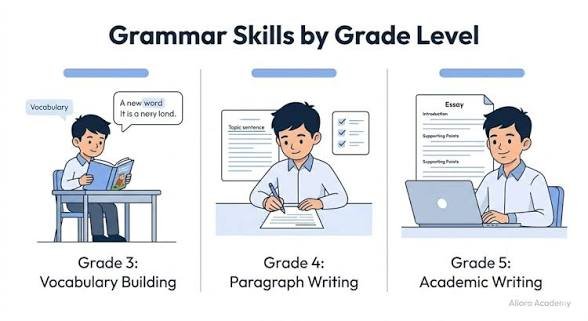
Writing a long academic paper requires more than just gathering research and organizing thoughts. When students sit down to draft an extensive essay, they often run into a wall not because they lack knowledge about the subject, but because of the intricate web of grammar rules that govern formal writing. Mastering these rules demands patience, practice, and a sharp eye for detail. Yet, year after year, learners stumble over punctuation, sentence variety, and syntax. Understanding why these hurdles exist can help writers build stronger habits and produce cleaner, more persuasive work.
The transition from casual communication to academic discourse represents a massive leap. Modern digital communication encourages shorthand, emojis, and loose sentence structures. When students pivot from texting or social media to drafting a ten-page research paper, the cognitive shift proves jarring. Rules regarding passive versus active voice, subordinate clauses, and proper comma placement feel foreign and restrictive. Breaking down these specific challenges reveals why advanced grammar remains a persistent obstacle in higher education.
The Burden of Cognitive Load in Extended Writing
Writing a short paragraph allows a student to keep most of the grammar rules straight in their working memory. However, as an essay expands past five hundred words, cognitive overload sets in. The writer must simultaneously track thesis development, evidence integration, source citations, and structural flow.
When the brain juggles too many tasks at once, foundational grammar slips through the cracks. Writers frequently forget agreement rules, misplace modifiers, or run sentences together. This mental fatigue explains why the final pages of a draft often contain significantly more errors than the introduction.
- Working Memory Limits: Juggling multiple academic requirements drains mental energy quickly.
- Structural Fatigue: Maintaining consistency in tense and tone across thousands of words challenges even diligent writers.
- The Editing Gap: By the time a draft reaches conclusion, writers experience fatigue, missing obvious punctuation mistakes.
Navigating the Maze of Subordinate Clauses and Complex Sentences
Long essays demand varied sentence structures to maintain reader engagement. Relying solely on simple sentences makes writing sound choppy and immature. To fix this, students incorporate compound and complex sentences filled with dependent and independent clauses.
Unfortunately, these advanced structures invite punctuation errors. Commas before conjunctions get misplaced, and restrictive versus non-restrictive clauses cause constant confusion. When a writer loses track of the main subject amidst a flurry of modifiers, dangling modifiers appear. These errors muddy the argument and distract professors from the core analysis.
To overcome these structural hurdles, students often benefit from professional guidance. When assignments pile up and grammar rules become overwhelming, finding reliable assignment help online provides a practical way to review properly structured models. Seeing how professional editors handle intricate syntax helps students improve their own drafting techniques over time.
Subject-Verb Agreement Across Distances
In basic sentences, matching a subject with its verb feels intuitive. The dog runs. The dogs run. Simple enough. However, academic essays introduce complex subjects separated from their verbs by prepositional phrases, relative clauses, or parenthetical remarks.
Consider this common error: “The collection of historical manuscripts detailing medieval trade routes were discovered in the basement.” Because the noun “routes” sits right before the verb, writers mistakenly use a plural verb. The true subject, “collection,” is singular, requiring the verb “was.”
These distance errors multiply in long papers because phrases wrap around one another, obscuring the core grammatical skeleton. Keeping track of subjects across lengthy sentences requires deliberate proofreading and structural awareness.
Misunderstandings Surrounding Punctuation Mechanics
Punctuation marks act as traffic signals for readers, guiding them through pauses, stops, and transitions. In long essays, improper punctuation completely alters meaning. The misuse of semicolons, colons, and em dashes remains rampant among college-bound writers.
- Semicolons: Frequently confused with commas, they link two independent clauses that share a close conceptual relationship.
- Colons: Require a complete independent clause before the mark, introducing a list, explanation, or emphatic point.
- Commas: Overused in places where breaths happen naturally rather than where grammatical pauses belong.
Mastering these mechanics takes targeted practice. For those tackling specific language modules, utilizing specialized help with English assignment resources clarifies punctuation nuances and boosts overall writing confidence.
The Trap of Nominalization and Passive Voice
To sound academic, students frequently fall into the trap of nominalization—turning verbs into nouns. Instead of writing “The researchers analyzed the data,” a student might write, “An analysis of the data was conducted by the researchers.”
This shift forces the sentence into the passive voice, bloating the word count and burying the actor. Long essays filled with nominalization become dense, sluggish, and grammatically fragile. Writers lose track of who is performing the action, which frequently leads to ambiguous pronoun references.
Building Sustainable Editing Habits
Overcoming grammar struggles requires moving away from last-minute proofreading. A single reading session right before the submission deadline cannot catch deep structural flaws. Successful writers break the editing process into distinct phases:
- Macro Editing: Focus entirely on argument flow, paragraph transitions, and thesis alignment.
- Syntax Check: Read sentences aloud to catch run-ons, comma splices, and awkward phrasing.
- Micro Polish: Scan specifically for punctuation accuracy, subject-verb agreement, and spelling anomalies.
By treating grammar as an evolving craft rather than a rigid checklist of penalties, students transform their academic output. Every correction builds a stronger foundation for future writing challenges, turning frustration into clarity.
Conclusion
Mastering complex grammar in long essays is a gradual journey that requires patience, targeted practice, and a willingness to break bad writing habits. While navigating subordinate clauses, distant subject-verb agreements, and heavy academic phrasing can feel overwhelming, understanding these common pitfalls is the first step toward improvement. By slowing down the drafting process, prioritizing active voice, and breaking editing into manageable phases, students can transform their writing from a source of frustration into a powerful tool for academic success. Consistent effort and the right support resources ultimately turn intricate grammar rules into second nature.
