
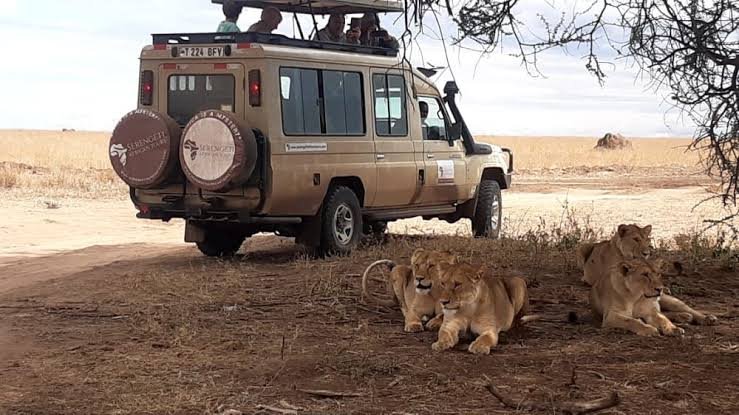
Lions are powerful wild predators, so it is natural to wonder why they often appear calm around safari vehicles. In most guided safari settings, the answer comes down to animal behavior, vehicle shape, and strict safari safety measures that keep people from being seen as separate, vulnerable targets. This wildlife safety guide explains the basics in plain language, especially for travelers planning a Luxury Tanzania Safari or any big-cat viewing experience.
Why do lions usually ignore tourists in jeeps?
Lions usually ignore tourists in jeeps because they tend to perceive the vehicle as one large, unfamiliar object rather than as a group of individual people. When guests stay seated, quiet, and inside the vehicle, they do not trigger the same visual cues as prey animals moving separately through the grass. This is the core idea behind lions tourist jeep safety: the vehicle, the guide’s control, and visitor behavior all work together.
That does not mean lions are tame or harmless. A lion resting beside a track may look relaxed, but it is still reading movement, sound, distance, and confidence. The safest safari moments are often the calmest ones, because no one is standing up, leaning out, shouting, or trying to get a closer photo.
The jeep changes what the lion sees
A safari vehicle is taller, louder, and shaped differently from the animals lions normally hunt. Over time, lions in protected areas may become used to vehicles that do not chase, feed, or threaten them. They may walk past, lie in the shade of a vehicle, or continue sleeping while people watch from inside.
The important detail is consistency. If tourists suddenly break the outline of the jeep by standing up, waving, or stepping out, the situation changes. A person outside the vehicle is no longer part of the “single object” the lion has been ignoring. That is why guides are firm about staying seated and following instructions.
Safari safety measures depend on guides and guest behavior
Professional guides understand lion body language far better than visitors do. They watch for signs such as fixed staring, tail movement, alert posture, growling, or a lion changing direction toward the vehicle. They also know when to hold position, reverse slowly, or leave an area.
Useful tourist safety tips include:
- Stay inside the vehicle unless your guide clearly says it is safe to exit.
- Keep hands, cameras, and phones inside the jeep.
- Avoid loud voices, sudden movements, and flash photography near animals.
- Never try to call, feed, touch, or distract a lion.
- Listen to your guide immediately, even if the lion appears calm.
- Keep children seated and supervised throughout the drive.
These habits may feel simple, but they are the foundation of responsible lions tourist jeep safety.
What should you do during a close lion sighting?
During a close lion sighting, stay calm, remain seated, speak softly if needed, and let your guide manage the encounter. Do not stand for a better view, lean out for a photo, or assume a relaxed lion cannot react quickly. The best sightings happen when people respect distance and let wildlife behave naturally.
For travelers on a Luxury Tanzania Safari, this balance is part of the experience: comfort, expert guiding, and respectful wildlife viewing. A good safari is not about getting dangerously close; it is about understanding the animal, the landscape, and your place within it.
The takeaway for safer wildlife viewing
Lions generally do not attack tourists in jeeps because the vehicle reduces the cues that make people look like prey, and trained guides manage distance and behavior carefully. Still, safety depends on treating every lion as wild and unpredictable. Follow your guide, stay inside the vehicle, and use this wildlife safety guide as a reminder that respect is the best protection on safari.

Emily Claire is a dedicated writer and English grammar specialist who helps readers improve their language skills with clarity and confidence. At Grammar Schooling, she turns complex grammar rules into clear, engaging lessons that make learning enjoyable. Her passion lies in empowering learners worldwide to communicate effectively and express themselves with ease.