
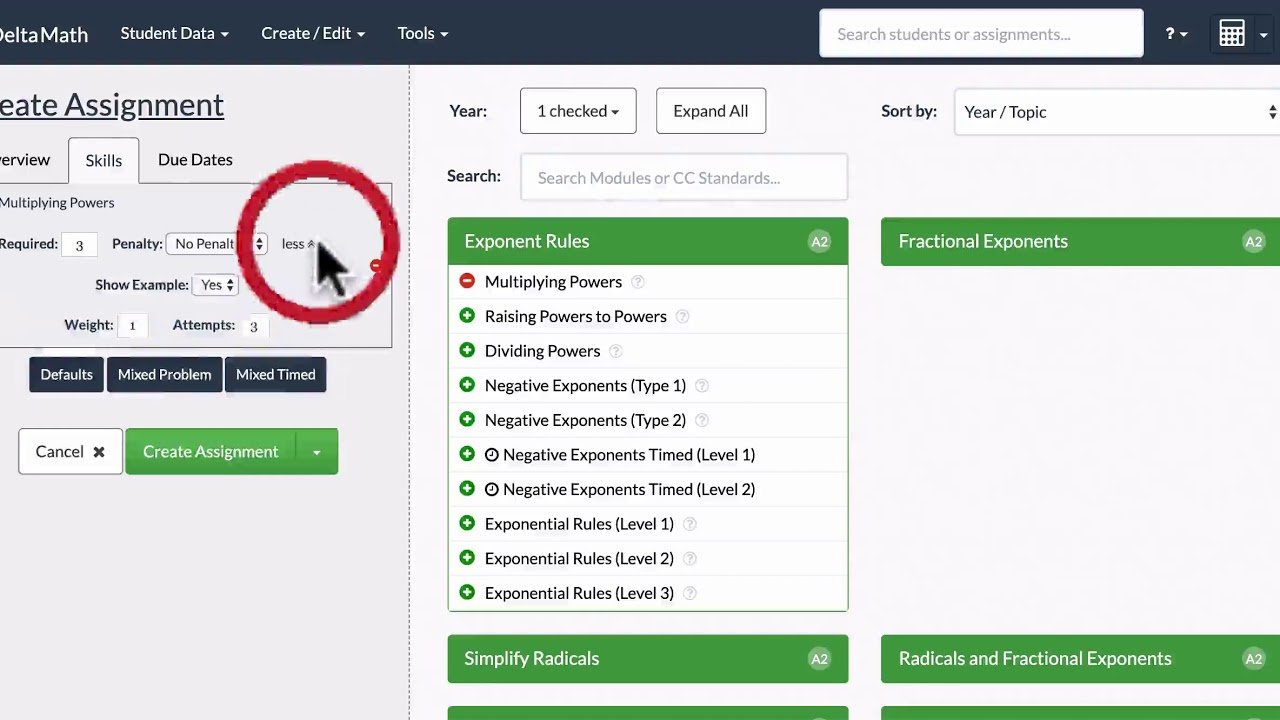
You’re staring at a DeltaMath problem, you’ve done the work, you hit submit, and… red X. Nothing more frustrating, right? You know you did something right, but the system just tells you it’s wrong without pointing at the actual mistake. That’s usually the moment someone opens a new tab and types Delta Math Answers into Google.
Here’s the thing, though. If all you get out of that search is a number to type in, you haven’t actually fixed anything. The next problem — the one that looks almost the same but isn’t quite — is going to trip you up the exact same way. A final answer tells you what the result should be. It doesn’t tell you where your sign flipped, or why you picked the wrong formula, or what the question was actually asking for in the first place.
This guide takes a different angle. Instead of handing you a list of answers that may or may not match your assignment, it walks through how to actually solve DeltaMath problems, how to check your own work before you submit, and how to figure out exactly where things went sideways when your answer comes back wrong. That’s the stuff that actually saves you time in the long run.
What Are Delta Math Answers, and What Do Students Actually Need?
When people search for Delta Math answers, they’re usually after one of a few different things, even if they don’t phrase it that way. Sometimes it’s just the final number. Sometimes it’s the full worked-out solution, step by step. Sometimes it’s a way to check whether the answer they already got is correct. And sometimes it’s just a hint — something to nudge them in the right direction without giving the whole thing away.
The final number is the least useful of these, honestly. Knowing that x equals 7 doesn’t tell you anything about how to get there. A worked solution is much better because it shows the method, and the method is what you’re going to need again on the next problem, and the one after that. What you actually need isn’t the answer sitting in the box — it’s the ability to reproduce the process on your own.
Why a Correct Answer Can Still Be Unhelpful
Say you copy the right number into the answer field. Great, you got credit. But did you learn which formula applies to that kind of problem? Do you know how to set up the equation from scratch next time? If it was a graphing question, do you understand why that particular point satisfies the equation? None of that comes from copying. It only comes from working through the logic yourself, even if you get a wrong answer once or twice along the way.
How to Solve a DeltaMath Problem Step by Step
Most DeltaMath questions, no matter the topic, respond well to the same basic approach. It’s not flashy, but it works.
1. Read the Entire Question
This sounds obvious, but a lot of mistakes happen because someone starts calculating before they’ve actually figured out what’s being asked. Read it once for context, then read it again slowly, paying attention to exactly what value the problem wants — is it asking for x, for the area, for a probability, for the equation of a line?
2. Identify the Math Topic
Once you know what’s being asked, figure out what branch of math it’s pulling from. Linear equations behave differently than systems of equations. Functions have their own rules. Exponents, geometry, trigonometry, probability, statistics, graphing — each comes with its own toolkit. Not every assignment is going to touch all of these, obviously, but recognizing the category narrows down your options fast.
3. Write Down the Known Information
Separate what you’re given from what you need to find. This seems like a small step, but it keeps you from mixing up variables or accidentally solving for the wrong thing halfway through.
4. Choose the Correct Method
Pick your approach based on the actual mathematical relationship in the problem — not because a certain method “feels right” or worked on the last question. Guessing your way to a method is how avoidable mistakes creep in.
5. Solve Step by Step
Write out your work. Don’t skip steps in your head, especially with algebra, because that’s exactly where sign errors and dropped terms like to hide.
6. Check Before Submitting
Before you hit that submit button, run a quick check. Substitute your answer back into the original problem, estimate whether the number is reasonable, glance at the graph again, double-check your units. It takes thirty seconds and it catches a surprising number of mistakes.
How to Check Your Delta Math Answer Before Submitting
Different problem types call for different checks, and knowing which one to use saves you from wasted resubmissions.
Algebra Problems
Substitute your result back into the original equation. If solving 2x + 5 = 15 gives you x = 5, plug it back in: 2(5) + 5 = 15. Both sides match, so you’re good. If they don’t match, you’ve got your mistake right there, no guessing needed.
Graphing Questions
Look at your coordinates, your intercepts, the slope, the direction the line is heading. Does the point you plotted actually satisfy the equation when you plug the coordinates in? That one check alone catches a lot of graphing errors.
Geometry Problems
Recheck your units first — this is where a surprising number of otherwise-correct answers go wrong. Then double-check the formula you used and the dimensions you plugged in. Ask yourself if the final number makes sense in real-world terms. A rectangle’s area shouldn’t come out negative, for instance.
Word Problems
Go back to the actual wording. It’s easy to solve for the right variable but answer the wrong question — like finding the width when the problem asked for the perimeter. Ask yourself plainly: does this number actually answer what was asked?
Common Reasons DeltaMath Answers Are Marked Wrong
A lot of the time, students aren’t looking for an answer at all — they’re trying to figure out why the one they already have got rejected. Here’s where things usually go wrong.
Sign Errors
A missed negative sign can flip an entire result. This is probably the single most common mistake in algebra, and it’s sneaky because the rest of the work can be flawless.
Arithmetic Mistakes
Your method can be completely correct while one small calculation — a multiplication, a subtraction — throws off the whole answer.
Incorrect Formula
Sometimes the process looks clean and logical, but it’s built on the wrong formula. The math checks out internally; it’s just answering a different problem than the one you were given.
Rounding Too Early
Rounding in the middle of a multi-step problem, rather than at the very end, can shift your final answer just enough to get marked wrong — especially if the question specifies a particular decimal place or rounding rule.
Input or Formatting Mistakes
This one trips up a lot of students who actually did the math right. Check exactly what format the answer box wants. A fraction instead of a decimal, a specific number of decimal places, an exact value instead of a rounded one — these formatting details matter just as much as the math itself.
How to Find the Mistake When Your Answer Is Wrong
Instead of redoing the whole problem from scratch (which, let’s be honest, usually just recreates the same mistake), try tracing it:
- Read the original question again, slowly.
- Figure out the first step where you’re not 100% sure the result was right.
- Recalculate just that step on its own.
- Check your signs and your arithmetic there specifically.
- Confirm the formula or rule you used actually applies.
- Try working backward from what you expect the answer to look like.
- Compare your result against a rough estimate — does it land in a reasonable range?
This is basically error tracing: find the earliest questionable step instead of blindly redoing everything. It’s faster, and it teaches you something about where your weak spot actually is.
Using DeltaMath Answers as a Learning Tool
There’s a real difference between these two approaches:
Try → Solve → Check → Find the mistake → Correct → Repeat
versus
Search → Copy → Submit → Forget
The first one is slower in the moment. It’s also the one that actually builds skill you can use on a test where there’s no answer key to search for. The second gets you through tonight’s homework and leaves you exactly as stuck as before, next time.
What to Do When You Are Completely Stuck
If you’ve genuinely hit a wall, it’s fine to reset. Re-read the instructions from scratch. Go back to the mathematical rule the problem is built on. Check your class notes. Ask your teacher for clarification — that’s what they’re there for. Break the problem into smaller pieces instead of trying to solve it all at once. And if you look at a worked example, focus on understanding the method behind it rather than matching numbers to your own problem.
A Simple Example of Checking a Math Answer
Let’s walk through one basic example, just to see the checking process in action.
Problem: Solve 3x − 4 = 17.
Step 1: Add 4 to both sides. 3x = 21
Step 2: Divide by 3. x = 7
Step 3: Check it. Substitute 7 back into the original equation:
3(7) − 4 = 17 21 − 4 = 17
Both sides match, so the answer checks out. That last step — plugging the result back in — is what actually confirms the solution works. Skip it, and you’re just hoping you got it right.
DeltaMath Answers vs. Understanding the Solution
| Approach | What it provides |
| Final answer only | Tells you the result |
| Worked solution | Shows the method |
| Answer checking | Helps identify mistakes |
| Independent practice | Builds long-term skill |
| Teacher explanation | Helps resolve confusing concepts |
When someone searches for Delta Math Answers, what actually helps them is whatever gets them closer to understanding the process, not just the number in the box.
Tips for Getting Better at DeltaMath Problems
Keep your scratch work organized instead of scribbling in the margins — you’ll thank yourself when you need to trace back through a mistake. Write the formula out before you start substituting numbers into it; it keeps you honest about which variable goes where. Circle or underline whatever quantity you’re actually solving for, so you don’t lose track halfway through. Slow down around negative signs specifically, since that’s where most careless errors hide. In geometry and measurement problems, check your units before you check anything else. When you can, estimate the answer first so you have something to compare your final result against. And if you keep making the same type of mistake across different problems, that’s worth pausing on — it’s more useful to fix the pattern than to treat each wrong answer as its own isolated incident.
Use Answers to Check Your Thinking, Not Replace It
A useful answer is more than just a number sitting in a box. It’s the reasoning behind it — the formula, the steps, the reason it works. Read the question carefully, identify the method, solve it step by step, check your work, find your errors when they happen, correct them, and let that correction actually teach you something.
That’s really the whole point behind searching for Delta Math answers in the first place: not to skip the thinking, but to get unstuck long enough to understand it. Next time you’re about to submit a problem, take a few extra seconds and verify your result using the actual math behind it. It’s a small habit, but it’s the one that sticks with you long after the assignment is graded.
Frequently Asked Questions About Delta Math Answers
1. What are Delta Math Answers?
Delta Math Answers generally refers to the solutions students look for when working through DeltaMath questions. The most useful purpose is to check your work and understand the method rather than simply copying a final response.
2. How can I check whether my DeltaMath answer is correct?
Use the checking method that fits the problem. For equations, substitute your result back into the original equation. For graphing questions, verify the coordinates and relationships. For geometry, recheck the formula, the measurements, and the units.
3. Why does DeltaMath say my answer is wrong when my calculation looks correct?
Go back and recheck the original question, your signs, your arithmetic, the formula you used, any rounding instructions, and how you entered the answer. A small setup mistake or formatting issue can change the outcome even when most of the actual math was right.
4. Should I use Delta Math Answers to do my homework?
Using a solution just to copy the answer tends to leave you unprepared for the next similar problem. It works better to attempt the question on your own first, use outside help to understand the method behind it, and then try a similar problem by yourself to confirm it stuck.
5. How can I find where I made a mistake in a math problem?
Go through your work one step at a time and find the earliest point where your reasoning or calculation might have gone off track. Rechecking that specific step is usually faster than starting the whole problem over.
6. What should I do if I still cannot solve a DeltaMath problem?
Review the relevant lesson or your class notes, break the problem down into smaller parts, and ask a teacher or another reliable source to walk you through it. The goal is understanding the process, not just landing on the final number.

Emily Claire is a dedicated writer and English grammar specialist who helps readers improve their language skills with clarity and confidence. At Grammar Schooling, she turns complex grammar rules into clear, engaging lessons that make learning enjoyable. Her passion lies in empowering learners worldwide to communicate effectively and express themselves with ease.