
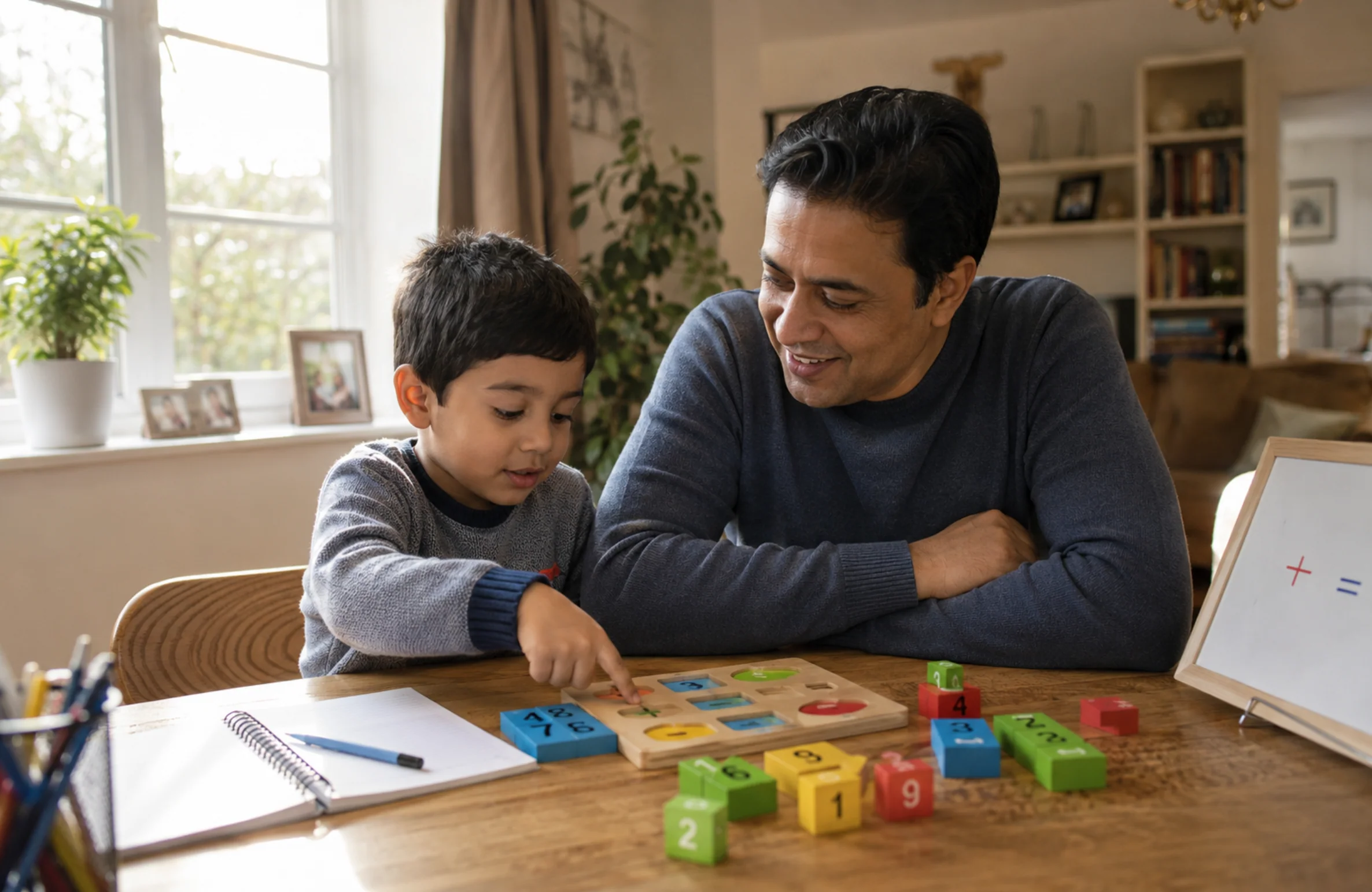
Every child learns mathematics differently. Some understand new concepts quickly, while others need more explanation and practice before feeling confident. Although classroom lessons provide an important foundation, children may sometimes require additional support to overcome learning difficulties. When parents and tutors work together through the best Singapore math tutoring approach for their child’s needs, they can identify learning gaps, establish realistic goals and create a consistent learning experience. This teamwork helps children strengthen their mathematical understanding while developing confidence in their abilities.
| Table of ContentsWhy Is Parent–Tutor Collaboration Important in Mathematics?Understanding the Roles of Parents and Tutors6 Ways Parents and Tutors Can Improve Maths Learning TogetherHow Online Learning Can Support Parent–Tutor CollaborationCommon Mistakes Parents and Tutors Should AvoidFinal ThoughtsFrequently Asked Questions |
Why Is Parent-Tutor Collaboration Important in Mathematics?
Children spend only part of their day learning with a teacher or tutor. Regular practice at home also plays an important role in their progress.
For example, a tutor may teach multiplication using diagrams, but without practice, a child may forget the method. Parents may also notice their child struggling with homework without knowing the exact reason.
Regular communication helps parents and tutors understand the child’s difficulties and provide the right support.
When both follow the same learning plan, children receive clear guidance, build confidence and make steady progress.
Understanding the Roles of Parents and Tutors
Parents and tutors have different responsibilities, but both contribute to a child’s mathematical development.
Tutors focus on explaining concepts, identifying learning difficulties and providing structured instruction. Parents help reinforce these lessons by encouraging regular practice and creating a positive learning environment at home.
The following table explains how their responsibilities can complement one another.
| Learning Area | Tutor’s Role | Parent’s Role |
| Learning goals | Identify suitable mathematical targets | Discuss expectations and support the goals |
| Concept understanding | Explain topics using suitable teaching methods | Encourage children to explain what they have learned |
| Practice | Recommend relevant exercises | Establish a manageable practice routine |
| Progress tracking | Assess understanding and identify learning gaps | Observe difficulties during homework |
| Motivation | Provide constructive feedback | Recognise effort and improvement |
Neither parents nor tutors need to handle every responsibility independently.
The aim is to create a balanced approach that supports the child’s individual learning needs.
6 Ways Parents and Tutors Can Improve Maths Learning Together
Effective collaboration requires more than occasional progress updates. Parents and tutors should work towards shared goals while recognising that children may need different levels of support throughout their learning journey.
1. Set Clear and Achievable Learning Goals
Before starting extra maths lessons, parents and tutors should understand the child’s current skills.
A child may be good at basic calculations but struggle with fractions or word problems. Knowing these difficulties helps set realistic learning goals.
For example, instead of saying “improve maths”, a clearer goal could be solving two-step word problems without help within six weeks.
Clear goals help parents, tutors and children know what to focus on. They also make it easier to track progress and decide when to move on to harder topics.
2. Maintain Regular and Open Communication
Regular communication helps parents and tutors identify learning difficulties early.
Tutors can share updates on topics covered, the child’s progress and areas that need more practice. Parents can also explain how their child manages homework and which activities they find difficult.
These discussions do not have to be long. A quick update after each lesson or a monthly review can help everyone stay informed.
The focus should be on finding ways to improve rather than only discussing mistakes or exam results.
3. Identify Learning Gaps Early
Maths topics are connected, so struggling with one skill can make future lessons harder. For example, a child who finds multiplication difficult may also struggle with division and fractions.
Parents and tutors should look for repeated mistakes instead of simply giving children more worksheets.
For example, if a child keeps choosing the wrong calculation in word problems, they may have difficulty understanding the question rather than doing the maths.
Tutors can identify the problem and suggest suitable exercises, while parents can provide extra practice at home.
Identifying these difficulties early helps children build stronger maths skills.
4. Create a Consistent Practice Routine
Children need regular practice to remember what they learn during tutoring. However, giving them too much homework can create unnecessary pressure.
Parents and tutors should plan a simple practice routine based on the child’s age, abilities and school schedule.
Younger children can practise through number games, pictures and basic calculations. Older students may need exercises involving fractions, word problems and multi-step questions.
Tutors can suggest suitable activities, while parents help children follow the routine at home.
The goal should be to help children understand maths concepts, not just complete more questions.
5. Encourage Problem-Solving Instead of Memorisation
Mathematics involves understanding relationships, analysing information and choosing suitable methods to solve problems.
Although memorising certain mathematical facts is useful, relying entirely on memorisation may make unfamiliar questions more challenging.
Parents and tutors can encourage deeper understanding by asking children to explain their reasoning.
For example, instead of immediately correcting an incorrect answer, they might ask:
- What is the question asking?
- Why did you choose this method?
- Can you draw a diagram to explain the problem?
- Is there another way to find the answer?
Singapore Math supports this approach through visual models and the Concrete–Pictorial–Abstract method.
Encouraging children to explore different solutions helps develop independent thinking and problem-solving skills.
6. Review Progress and Adjust Learning Strategies
A learning plan should change as a child’s understanding improves.
Parents and tutors can review progress through completed exercises, short assessments and discussions about challenging topics.
For example, a student who has mastered basic multiplication may be ready to apply the concept to more complicated word problems.
However, if the child continues to struggle with an earlier topic, additional revision may be necessary before progressing.
These reviews help ensure that learning goals remain realistic and relevant.
Parents should also recognise small achievements, such as completing a difficult question independently or explaining a mathematical concept clearly.
Progress should be measured against the child’s previous abilities rather than through constant comparison with other students.
How Online Learning Can Support Parent–Tutor Collaboration
Digital learning resources can make communication and progress tracking more convenient for families.Through Singapore Math online lessons, students may access interactive exercises, visual demonstrations and revision materials that complement their tutoring sessions.Depending on the programme, tutors may also be able to share digital worksheets, review completed activities and provide feedback remotely.
Parents can use these resources to understand which topics their child is currently learning and identify areas requiring additional attention.For example, if a child struggles with fraction questions during an online exercise, parents can share this observation with the tutor before the next lesson.However, digital resources should support meaningful learning rather than replace communication between parents, children and tutors.
Common Mistakes Parents and Tutors Should Avoid
Even with good intentions, certain approaches can make mathematics learning more stressful than necessary.
One common mistake is setting unrealistic expectations. Expecting immediate improvement after a few tutoring sessions may discourage children who need additional time to understand challenging topics.
Another issue is focusing too heavily on examination results while overlooking improvements in understanding and problem-solving.
Parents and tutors should also avoid introducing conflicting calculation methods without explaining how they relate to one another.
Other mistakes include assigning excessive homework, comparing children with classmates and progressing towards advanced topics before earlier concepts are understood.
A balanced approach that considers the child’s abilities, confidence and learning pace is more likely to support meaningful progress.
Final Thoughts
Improving a child’s maths skills requires regular practice, clear learning goals and good communication between parents and tutors. Working together helps them understand the child’s needs and provide suitable guidance. Families looking for structured learning support can explore Spartan Maths Malaysia, which follows Singapore Maths principles and focuses on developing mathematical understanding. The goal of parent–tutor teamwork should go beyond good exam results. It should help children think independently, solve problems and develop confidence in learning mathematics.
Frequently Asked Questions
1. Why is parent–tutor collaboration important for mathematics learning?
It helps children receive consistent guidance, allows learning difficulties to be identified early and ensures that parents and tutors work towards shared educational goals.
2. How often should parents communicate with their child’s maths tutor?
Brief updates after lessons and more detailed reviews every few weeks can help parents understand their child’s progress and discuss areas requiring additional support.
3. How can parents support maths tutoring at home?
Parents can establish a regular practice routine, encourage children to explain their answers and reinforce mathematical concepts through everyday activities.
4. Can online Singapore Math lessons improve learning outcomes?
Online lessons can complement tutoring by providing additional explanations, interactive activities and opportunities for revision when matched to the child’s learning needs.
