
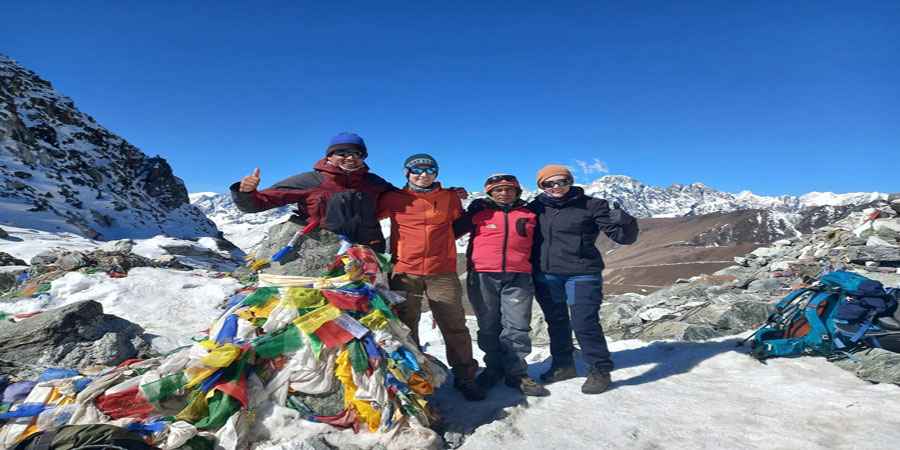
Mt Everest Base Camp Hike is one of the most thrilling adventures one can embark on in Nepal. It is a spectacular tour through the magnificent Everest region and a journey to the heart of the world. The trek is nothing like one would expect on a nature trail, or a mountainous track. It is a trail through villages and dense forests, rocky paths, and suspension bridges, towards the great mountain ranges of Everest, Lhozhe, Nuptse and Ama Dablam, with a final destination of Everest Base Camp at 5364 meters (17,598 ft). Challenging but not impossible, all one needs is a well prepared, slow paced, and acclimatised body to conquer this legendary trail.
What is Mt Everest Base Camp Hike?
Mt Everest Base Camp Hike is a long trail to the base of the world’s highest peak undertaken by those looking to prepare for a challenge of ascending Mt Everest. The traditional route is taken from Lukla following a short but thrilling flight from Kathmandu. From the mountain village of Lukla, trekkers follow the trail to Phakding, then Namche Bazaar, Tengboche, Dingboche, Lobuche and on to Gorakshep to the last camp before Everest Base Camp. The entire trek usually lasts approximately two weeks, but this varies depending on the pace as well as the acclimatisation and travel days.
How to Start Your Everest Hike: From Lukla
Most trekkers begin their walking trail from Lukla. The village is found in the greater Everest region and home to many local residents that are always ready to assist visitors. Following a short but thrilling flight from Kathmandu one is greeted at the Lukla airport by their trekking crew, where the adventure truly begins and the trail winds off slowly towards Phakding.
How to Trek from Phakding to Namche Bazaar
A lovely walk from Phakding leads to Namche Bazaar along the Dudh Koshi river, a small settlement nestled among the forested hills and dotted by local villages. Beautifully decorated bridges are crossed as the trail meanders towards Namche Bazaar. It is a relatively short walk, but one should not expect to rush as the final approach to this charming mountain village is a steady incline. The village offers stunning views and makes a perfect acclimatisation stop.
Acclimatisation: Rest Day in Namche Bazaar
Acclimatisation is an essential, though potentially boring and frustrating, activity which is required for anyone trekking in the Himalayas. As we move upwards along the trail our bodies must adapt to the new atmospheric conditions, meaning that additional time must be spent at any given altitude to allow acclimatisation. This is especially important in the Everest region due to the extreme altitudes of the trail. For these reasons an extra day should always be spent in Namche Bazaar. A short walk should be taken around the village followed by an overnight return to Namche Bazaar to ensure proper acclimatisation occurs.
How to Trek to Tengboche from Namche Bazaar
A lovely trek from Namche Bazaar leads to Tengboche, passing through great forested mountain slopes and picturesque local hamlets. The trail is characterised by a number of beautifully adorned bridges, which are passed as one follows a trail through the Dudh Koshi riverbed. As Tengboche nears, the forest begins to thin out, offering spectacular views of Ama Dablam, Everest, Lhotse and other great Himalayan peaks, if the weather is clear. This is a great day to spend time enjoying the views and reflecting on the journey, as the trail continues towards Dingboche.
How to Trek from Tengboche to Dingboche
The trail from Tengboche leads higher into the mountainous region taking in a number of lovely but isolated mountain hamlets along the way. This stage presents the hiker with some breathtaking mountain views across vast valleys and glaciers. It is a slow paced, steady walk which can be particularly tiring in the thinner atmosphere at these higher altitudes. Again, hikers must always remember to take regular breaks and slow their pace to avoid altitude related problems. The trail from Tengboche to Dingboche is a key acclimatisation and sightseeing stage, necessary for continued trekking at these altitudes. Finally, after four or five days of hiking at high altitude, Dingboche offers a spectacular view across the Everest Himalayas and a well deserved rest from walking.
Acclimatisation Day: Rest Day in Dingboche
Dingboche allows for another day of acclimatisation which is critical to avoid altitude sickness and enables the trekker to continue their journey without concern. Again, short walks to scenic vantage points are extremely rewarding, and an essential part of any Himalayan trekking itinerary. One may begin to feel like you are wasting your time, but these extra days are critical to a safe and enjoyable trekking experience.
How to Trek to Lobuche from Dingboche
The trail from Dingboche to Lobuche begins a steady incline with the landscape becoming progressively rocky and the air colder. At this point on the trek it is important to remember to pace yourself as even walking upwards can be tiresome at these greater altitudes. The trail also takes one past some magnificent mountain scenery towards Lobuche at the base of several larger mountains. Upon reaching Lobuche, a warm meal and rest will aid preparation for the final stretch of the trek.
How to Trek to Gorakshep from Lobuche
The trail from Lobuche to Gorakshep is the final challenge before Everest Base Camp. It is a rough path which weaves between rocky and icy surfaces making it particularly taxing. The landscape becomes increasingly rugged underfoot and the thin air only compounds this. It is a short walk but one should ensure they take frequent breaks in order to prevent altitude sickness, not least of all due to the high altitude of this region. Surrounded by towering mountains and glaciers, Gorakshep is a small village, from which the final stage to Everest Base Camp begins.
How to Trek from Gorakshep to Everest Base Camp
A walk from Gorakshep commences the final leg of the trek towards Everest Base Camp, following a rocky trail which runs alongside the Khumbu glacier. Although the trek is not especially long, the altitude can be overwhelming so a slow and steady pace is important. At last, a view across the snow capped Himalayan Mountains opens up before the trekker, offering a spectacular panorama and the chance to take memorable photographs.
Optional Side Trek: Kala Patthar Hike
An optional but extremely popular excursion is a hike to Kala Patthar, one of the most rewarding sights on the Everest trail. Kala Patthar is famed for the spectacular views across the Everest region it affords guests and it is common to see many visitors at this site. Most hikers make the return journey to Gorakshep early in the morning to watch the sunrise views across the Everest Himalayas. This is a challenging but rewarding trek to one of the most iconic viewpoints of the Everest region. Following the morning excursion, it is a relatively easy walk back to Gorakshep before continuing on to the trail to Lobuche.
How to Trek from Everest Base Camp, Route to Lukla
From Everest Base Camp, there remains a long trail back towards Lukla. The route drops steadily through the mountainous terrain with the trail passing villages including Pheriche and Namche Bazaar en-route back to Lukla. As the journey descends in altitude, the trail becomes easier. Also, the trees and vegetation appear more abundant and lush as the trail winds down through this unique region. Finally one reaches Lukla ready to return to Kathmandu.
Is the Mt Everest Base Camp Trek Difficult?
While the Mt Everest Base Camp trek certainly presents a challenge, it is by no means a technical expedition and only the most hardened of hikers are likely to find it inaccessible. It is, nonetheless, far removed from the experience of a simple day-hike in localised and accessible areas. In terms of difficulty, long days of walking, steep inclines and declines, cold but tolerable temperatures, and higher altitudes present the greatest challenges for first time Everest trekkers. Additionally, despite not being a technical climb, the trek requires one to be in reasonably good physical condition and able to ascend to these high altitudes. Regular exercise such as running or walking, hill walking or climbing, as well as simple toning exercises may assist in preparing the body for the trek. Most importantly, a steady pace with regular rest days will enable the body to adjust to the altitude changes over time, thus avoiding altitude sickness and other related ailments.
What is the Best Time of Year to Trek?
There are two main seasons which see the most hikers making the journey to the Everest Base Camp: spring and autumn. These are the two traditional times of year that are best suited to trekking and offer the best weather conditions in the region. Though it is possible to hike during the winter months it can be unbearably cold at altitude, while the monsoon season brings with it cold, cloudy and wet conditions.
Why is this Trek Special?
Every day along the trail offers something different for the trekker with the ever-changing landscapes ranging from rivers and valleys to mountains, glaciers, local monasteries, villages and their unique traditions and culture, which all combine to make this a most special and unique adventure. The ever-mounting sight lines of the great Himalayan vistas provide a constant reminder that the trekker is in a truly special place. The journey is as much a part of the adventure as arriving at the goal and every moment should be enjoyed along the way.
Conclusion
Mt Everest Base Camp Hike is the most remarkable journey through the beautiful and unique regions of the Himalayas that all nature loving adventurers would get the chance to experience at least once in their lives. The journey from Lukla to Everest Base Camp is an extraordinary expedition that takes one through breathtaking, charming villages and forests, valleys and rivers, monasteries and glaciers, towards the great Himalayan massifs of Everest, Lhotse and Nuptse. Though exhausting, the trek can be made simple by the following simple but vital tips. Always take the right amount of time to prepare for the expedition, and always remember that slow paced walking as well as the right acclimatisation days will assist in minimising altitude sickness. Every step along the way will bring a new discovery or a greater view of the magnificent mountains in the distance. And in the end, at the summit of Everest Base Camp, the journey towards one of the world’s most iconic landmarks will become one of the most memorable experiences of your lifetime.
