
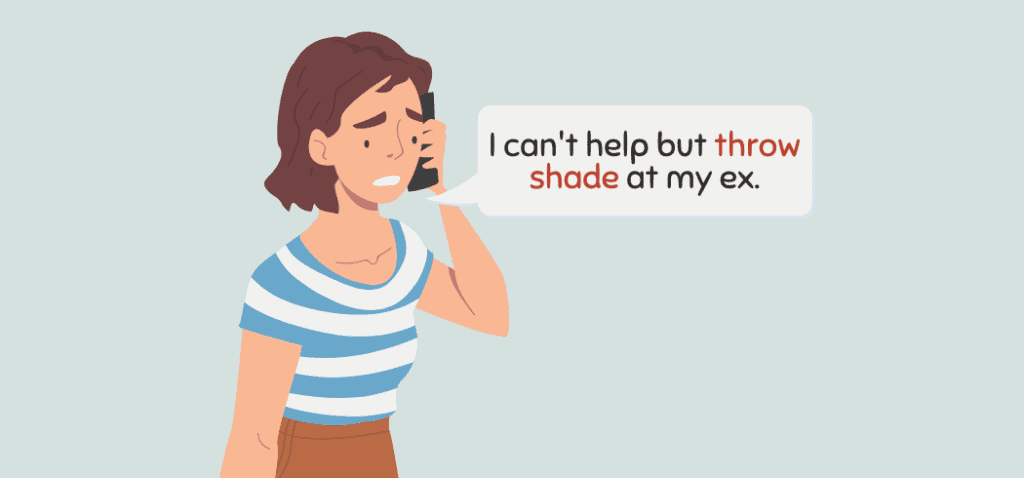
Language changes constantly, especially when people communicate through social media, text messages, and casual conversations. New expressions appear, popular phrases develop different meanings, and ordinary words become part of modern slang. One expression that has gained considerable attention is shade slang. It is commonly used to describe subtle insults, indirect criticism, sarcastic comments, or remarks intended to embarrass someone without openly confronting them.
You may have heard someone say, “She was throwing shade at him,” or “That comment was shady.” These expressions are popular in everyday conversations, entertainment, online discussions, and celebrity culture. Although they might sound harmless, they can carry a strong message depending on the situation, the speaker’s tone, and the relationship between the people involved.
Understanding shade slang helps you recognize hidden meanings in conversations and use the expression correctly. Whether you encountered it in a social media comment, a television show, or a conversation with friends, learning its meaning can make modern English easier to understand.
What Does Shade Slang Mean?
Shade slang refers to an indirect insult, subtle criticism, sarcastic remark, or expression of disrespect toward another person. Instead of openly saying something negative, a person may communicate their disapproval through a carefully chosen comment, a facial expression, or a sarcastic response.
For example, imagine someone arrives at a party wearing an outfit they feel proud of. Another person looks at them and says, “Well, at least you tried something different.” Although the sentence does not directly insult the outfit, it may suggest that the speaker dislikes it.
This is an example of throwing shade.
Shade can be serious, playful, or humorous. Friends sometimes use it to tease each other without causing genuine offense. In other situations, people use shade to express jealousy, frustration, rivalry, or disapproval.
The important point is that shade often communicates more than the literal meaning of the words. The listener must consider the context, tone, and relationship between the people involved to understand the intended message.
What Does Throwing Shade Mean?
The expression “throwing shade” means making an indirect or subtle negative comment about someone. It can involve sarcasm, mock praise, pointed jokes, or remarks that criticize another person without mentioning them directly.
For instance, suppose a coworker frequently arrives late to meetings. During a team discussion, another employee says, “It’s impressive how some people manage to make every meeting a surprise.”
The speaker does not identify the coworker by name. However, everyone who understands the situation may recognize the criticism.
That is throwing shade.
Here are a few additional examples:
- “Some people talk about success more than they actually work for it.”
- “I love how confident you are, even when you have no idea what is happening.”
- “Congratulations on finally doing what everyone expected you to do weeks ago.”
- “Not everyone knows how to appreciate good advice.”
Each sentence can communicate criticism indirectly. Depending on the relationship and circumstances, the comments might be playful jokes or genuinely disrespectful remarks.
Throwing shade does not always require words. Someone might roll their eyes, smile sarcastically, or give a knowing look after another person speaks. These nonverbal actions can communicate disapproval just as effectively as a spoken comment.
The Origin and History of Shade Slang
The modern slang meaning of shade has strong connections to African American English and Black LGBTQ+ ballroom culture. These communities played an important role in developing and popularizing the expressive use of shade.
One influential example is the documentary Paris Is Burning, released in 1990. The film explored New York City’s ballroom culture, including the performances, competitions, and social experiences of Black and Latino LGBTQ+ communities.
Within this cultural environment, shade could involve clever verbal criticism, humor, and social performance. The goal was often to communicate a pointed message with style and wit rather than engage in a direct confrontation.
Shade also became widely associated with drag culture, where quick responses, sharp observations, and humorous insults could be part of a performance. The related term “reading” describes the act of delivering pointed criticism or exposing someone’s flaws, often through witty remarks.
Over time, shade moved beyond these original cultural settings and entered mainstream entertainment and everyday speech. Television shows, celebrity interviews, online videos, and social media helped introduce the expression to wider audiences.
Today, people across different backgrounds use shade slang in casual conversations. However, understanding its cultural roots is important because the expression did not simply appear as a random internet trend. It developed through communities with distinctive traditions of humor, performance, and communication.
Common Examples of Shade Slang
Learning examples is one of the easiest ways to understand how shade works in everyday English.
1. “No shade”
“No shade” is used to suggest that a statement is not intended as an insult or serious criticism. People often say it before offering an opinion that could sound negative.
Example:
“No shade, but I think the original version of this song was much better.”
The speaker expresses a preference while attempting to soften the criticism.
However, saying “no shade” does not automatically make a comment harmless. A person might still feel offended by what follows.
2. “Throwing shade”
This phrase describes making an indirect insult or critical remark.
Example:
“He kept talking about people who never finish their projects. I think he was throwing shade at his colleague.”
The speaker believes the criticism was aimed at someone without directly identifying them.
3. “Shady”
The word “shady” can describe behavior that seems suspicious, dishonest, questionable, or deliberately disrespectful.
Example:
“She made a promise to help, but then secretly told everyone something different. That was shady.”
In this situation, shady refers to questionable behavior rather than merely a clever insult.
4. “That was shade”
This expression identifies a particular statement or action as an indirect insult.
Example:
“When he said he preferred working with people who actually meet deadlines, everyone knew that was shade.”
The phrase suggests that the comment had a hidden target.
5. “Serving shade”
“Serving shade” means delivering a sharp, sarcastic, or witty remark, often with confidence and dramatic flair.
Example:
“Her response was so clever that the whole room started laughing. She was serving shade.”
This expression is particularly common in entertainment discussions and online conversations.
How Shade Slang Is Used on Social Media
Social media has helped make shade slang more visible and widespread. Platforms that encourage short comments, public reactions, memes, and viral discussions provide many opportunities for people to express indirect criticism.
For example, someone might post a general statement after a disagreement with a friend:
“Funny how people remember you when they need something.”
The post does not mention a specific person. Nevertheless, the intended audience may understand who inspired it.
This type of indirect message is sometimes called a subtweet when it refers to someone without explicitly naming them, particularly on platforms such as X. A subtweet can contain shade, although the two terms do not mean exactly the same thing.
Shade also appears in comment sections, reaction videos, celebrity discussions, and humorous memes. A person might respond to a controversial statement with a sarcastic remark rather than a direct argument.
For example:
Person A: “I am always the most organized person in the group.”
Person B: “Your missing assignments would probably disagree.”
This response uses humor to challenge the original statement. Depending on the relationship, it might be friendly teasing or a public embarrassment.
Online shade can spread quickly because short, clever remarks are easy to share. However, written comments lack many of the facial expressions and vocal cues that help people recognize playful intentions. Consequently, a joke that seems harmless to the writer may feel insulting to the reader.
The Difference Between Shade, Sarcasm, and Insults
Shade, sarcasm, and insults are related concepts, but they are not identical.
Shade generally involves indirect criticism. The speaker may avoid naming the target or openly stating the negative message.
Sarcasm involves saying something that often means the opposite of the literal words, usually to express humor, frustration, or criticism.
An insult is a statement or action intended to offend, demean, or disrespect another person. It may be direct or indirect.
Consider these examples.
Shade: “Some people really know how to make an entrance, especially when they are an hour late.”
Sarcasm: “Wonderful timing! We were only waiting for an hour.”
Direct insult: “You are always late, and you are inconsiderate.”
The first statement indirectly criticizes someone’s punctuality. The second uses sarcasm to highlight the same problem. The third openly expresses disapproval.
These categories can overlap. A sarcastic remark may also be shade, and an indirect insult may contain sarcasm. The exact classification depends on the speaker’s intention and the context.
Is Shade Slang Always Negative?
Not necessarily. Although shade often involves criticism, its meaning depends on the circumstances.
Among close friends, shade can be a form of playful teasing. Friends might joke about each other’s habits, fashion choices, or harmless mistakes without damaging their relationship.
For example:
“You finally cleaned your room? Should we celebrate this historic occasion?”
This comment lightly mocks someone who rarely cleans their room. If both people understand the joke and enjoy the teasing, it may be a friendly exchange.
Shade can also be used humorously in entertainment. Comedians and television personalities sometimes make sharp observations that audiences appreciate because of their timing and creativity.
However, shade can become harmful when it targets someone’s insecurities, humiliates them publicly, or contributes to ongoing conflict. A person may describe a remark as a joke even when the other person experiences it as disrespectful.
The difference between playful shade and hurtful shade often depends on mutual understanding, the subject of the joke, and the relationship between the people involved.
How to Use Shade Slang in a Sentence
If you want to use shade slang naturally, begin with simple expressions that fit casual conversations.
Here are several examples:
- “Was that shade, or am I reading too much into it?”
- “She threw shade at his new hairstyle.”
- “No shade, but I preferred your previous idea.”
- “That comment was shady, even if he was smiling.”
- “He is always serving shade during our group discussions.”
- “I noticed the shade in her response immediately.”
- “They kept throwing shade at each other throughout the interview.”
- “I was not trying to throw shade; I was just giving my honest opinion.”
These examples demonstrate different ways to use the expression.
You can use “shade” as a noun, as in “That was some serious shade.” You can use “shady” as an adjective, as in “His explanation sounded shady.” You can also use “throwing shade” as a phrase describing an action.
When speaking with friends, these expressions may sound natural and humorous. In professional or formal situations, however, it is usually better to explain your concerns directly rather than rely on slang or indirect criticism.
Why People Throw Shade
People throw shade for several reasons, and not every situation has the same motivation.
Humor and entertainment
Some people use shade because they enjoy clever wordplay and witty observations. Their goal may be to make others laugh rather than hurt anyone.
Frustration
A person who feels ignored or mistreated may use an indirect remark to express dissatisfaction without starting an open argument.
Competition
In competitive environments, shade can be used to question another person’s achievements, confidence, or abilities. This is common in entertainment discussions, rivalries, and arguments on social media.
Jealousy or insecurity
Sometimes, indirect criticism comes from jealousy or personal insecurity. A person may attempt to diminish someone else’s success instead of acknowledging their own feelings.
Avoiding confrontation
Some people find direct disagreements uncomfortable. They may express their opinions through hints, sarcastic remarks, or general comments because they do not want to address the problem openly.
Although these motivations can help explain shade, it is important not to assume someone’s intentions based on one comment. Context and patterns of behavior provide a better understanding than speculation alone.
How to Respond When Someone Throws Shade at You
Recognizing shade is useful, but responding appropriately is equally important.
First, consider whether the comment was actually directed at you. Sometimes, people interpret ordinary statements as personal attacks when no insult was intended.
If the remark seems harmless, you may choose to laugh it off or ignore it. Not every sarcastic comment deserves a response.
If the comment is confusing, ask a calm question such as, “What did you mean by that?” This gives the speaker an opportunity to clarify their intention without immediately escalating the situation.
If the remark is clearly disrespectful, you can establish a boundary. For example, say, “If you have a concern about me, I would prefer that you tell me directly.”
On social media, avoid responding immediately when you feel angry. A public argument can attract unnecessary attention and make a minor disagreement more complicated.
The most effective response depends on the situation. Sometimes humor works well, while other situations require a direct conversation or no response at all.
Shade Slang in Popular Culture
Shade has become an important part of popular culture, particularly in discussions about celebrities, reality television, comedy, music, and online personalities.
Entertainment audiences often describe a celebrity’s interview response as shade when the person appears to criticize a rival without naming them. Similarly, a humorous reaction or pointed comment may be described as “shady” when it seems intended to embarrass someone.
Drag culture has also helped shape the public understanding of shade. In performances and competitions, a well-timed remark can demonstrate confidence, verbal skill, and comic ability.
Reality television frequently uses editing, reaction shots, and dramatic exchanges to emphasize moments of shade. These scenes can make ordinary disagreements appear more entertaining or intense.
Social media users then repeat memorable expressions, turning them into memes and common conversational phrases.
Nevertheless, not every negative celebrity comment is shade. Some statements are direct criticism, while others may be misunderstood because audiences lack the full context. Recognizing the distinction helps people interpret entertainment discussions more carefully.
Frequently Asked Questions About Shade Slang
What is the simplest meaning of shade slang?
Shade slang means making an indirect insult, sarcastic remark, or subtle criticism of another person. It can be playful or hurtful depending on the situation.
What does “no shade” mean?
“No shade” means the speaker is attempting to communicate that a statement is not intended as an insult. It is often used before expressing a potentially critical opinion.
What does it mean when someone says you are shady?
Calling someone shady can mean that their behavior seems suspicious, dishonest, questionable, or indirectly disrespectful. The precise meaning depends on the context.
Is throwing shade the same as bullying?
No. Throwing shade can involve a single playful or critical remark, whereas bullying generally involves harmful behavior that may be repeated or involve an imbalance of power. However, repeated or humiliating shade can contribute to bullying.
Can shade be positive?
Shade usually carries a negative or critical meaning, but it can be part of friendly teasing and entertaining banter. Some people enjoy clever remarks when everyone involved understands the humor.
Is shade slang appropriate in formal writing?
Generally, shade slang is best suited to informal conversations, entertainment articles, social media posts, and casual writing. Formal reports and professional communications usually benefit from clearer, more direct language.
Conclusion
Shade slang is a modern English expression used to describe indirect insults, sarcastic comments, and subtle criticism. Its cultural history is closely connected to African American English and Black LGBTQ+ ballroom culture, where wit, verbal creativity, and expressive performance helped shape its meaning.
Today, expressions such as “throwing shade,” “no shade,” “serving shade,” and “shady” are widely recognized in everyday conversations and online communication. They can communicate humor, frustration, rivalry, or disapproval without requiring a direct confrontation.
Understanding shade slang involves more than memorizing its definition. You also need to consider tone, context, relationships, and the speaker’s possible intentions. A remark that makes close friends laugh might offend someone in a different situation.
Ultimately, learning this expression can help you understand contemporary English, recognize indirect messages, and communicate more confidently. By using shade thoughtfully and interpreting it carefully, you can appreciate its humor and cultural significance without confusing playful banter with genuine disrespect.
